Ceremony stage hire in Turkey is about far more than a platform. Whether you are an embassy or consulate marking a Turkish national day, an international school preparing a 23 April show, or a company holding an official opening, the event succeeds or fails on details: the lectern microphone working from the first second, the anthem playing without a glitch, and children getting on and off the stage safely. This guide covers the stage, VIP stand and PA set-up we use for ceremonies, with practical redundancy rules and a planning timeline.
What a ceremony set-up includes
Most official ceremonies need five technical elements:
- VIP stand: a raised, shaded platform for guests and officials.
- Lectern: with dual microphones, plus a separate presenter position if needed.
- Performance stage or area: for student shows, folk dance, choirs or a band.
- Ceremony PA: clear, even coverage for speeches, the anthem and performance music.
- Video and power: LED screens and cameras where needed, generators and UPS.
The running order and protocol are set by the host institution; the technical crew's job is to support that running order flawlessly, attend the rehearsal and stay on site throughout.
Turkey's national days at a glance
For international planners, here is what each national day typically involves on the technical side:
| Date | National day | Typical technical focus |
|---|---|---|
| 23 April | National Sovereignty and Children's Day | Low, safe stages for children's performances; playback music |
| 19 May | Commemoration of Atatürk, Youth and Sports Day | Stadium or field shows; music coverage across large areas |
| 30 August | Victory Day | Ceremonies, sometimes parades; announcer positions along the route |
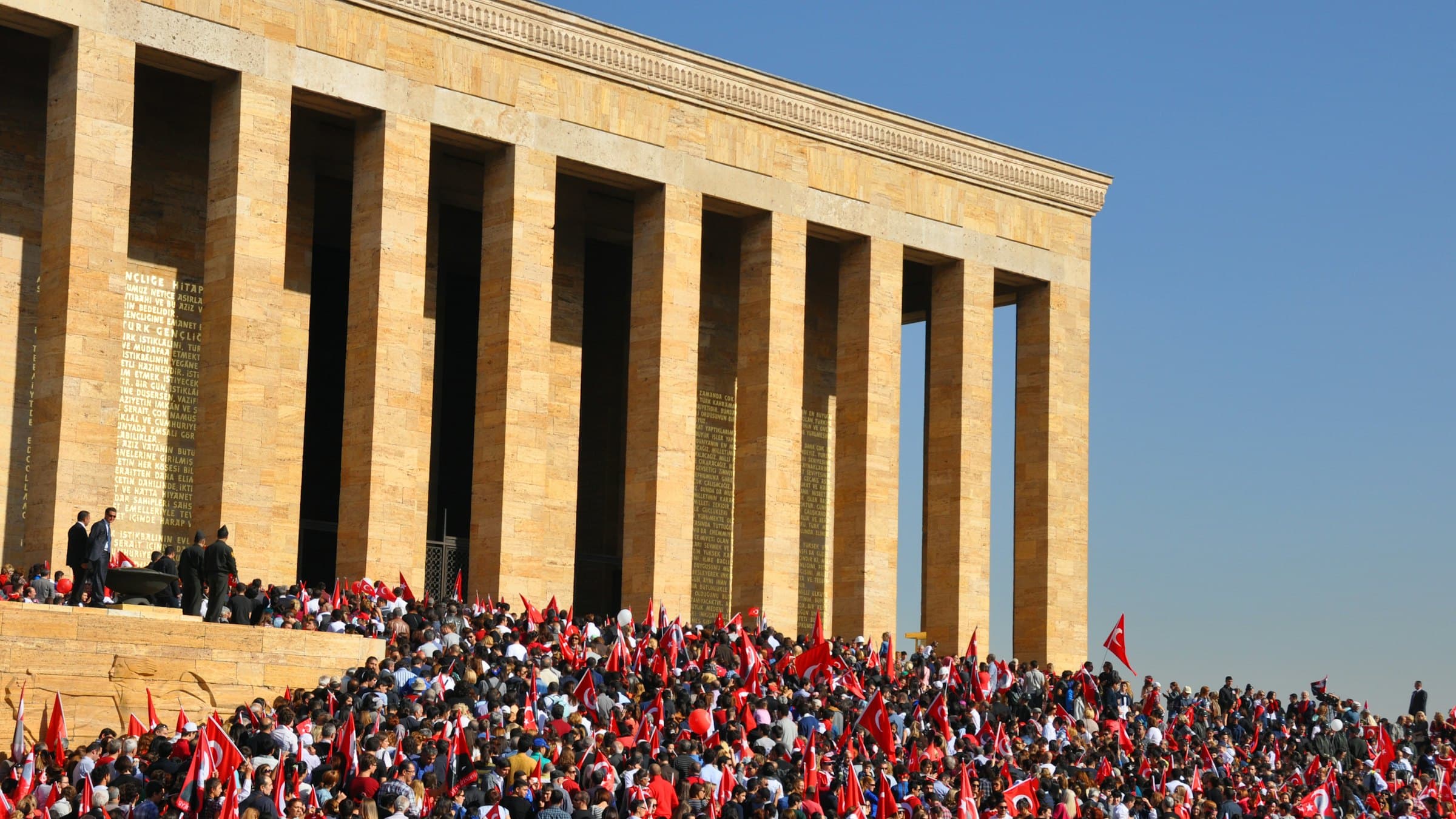
| 29 October | Republic Day | Ceremonies, evening concerts, lantern processions |
Republic Day usually carries the heaviest production load, with evening concerts and processions; see our dedicated 29 October Republic Day guide.
Lectern and VIP stand
A VIP stand is typically built on a platform of roughly 40–80 cm, stepped if there are several rows, with a canopy against the sun at the April, May and August ceremonies and against rain in late October. Include a ramp for step-free access, stairs on both sides and handrails. At the lectern, fit two gooseneck microphones on separate console channels, never point loudspeakers back at the speaker, use windshields outdoors, and keep a wireless handheld plus a spare for the presenter with fresh batteries. Our guide to wireless microphone rental explains frequency planning and backups.
Ceremony PA: anthem, silence and speeches
A ceremony PA prioritises intelligibility and reliability over volume. Everyone on the square should hear the anthem at the same time and understand every word of the speeches.
- In deep audience areas, add delay speakers instead of turning the main system up. As a rough guide, compact point-source systems often need delays beyond about 30–40 m; the exact point depends on the system and site and comes from a coverage prediction.
- Keep the anthem and ceremony music on two independent players and check order and level at rehearsal.
- Test cabling and grounding on build day so there is no hum during the moment of silence.
- Store separate console scenes for speech, anthem and performance music.
- Give the sound engineer a minute-by-minute running order and a direct line to the protocol team.
Put the console, players and wireless receivers on UPS, check generator fuel before the start and place the mixing desk where the engineer can see the lectern.
Children's performance stages
For 23 April and school shows, keep the stage low (around 40–60 cm), use wide stairs with shallow steps, separate entry and exit sides, handrails on the back and sides, a visible front-edge marking and a non-slip, gap-free surface. Plan a supervised waiting area beside the stage. Collect all playback tracks in one list, named in running order, well before the day. Most children's performances use recorded music, but choirs and live music need choir microphones along the stage front, and teachers should know exactly who signals the sound desk to start each track.
Indoor ceremonies
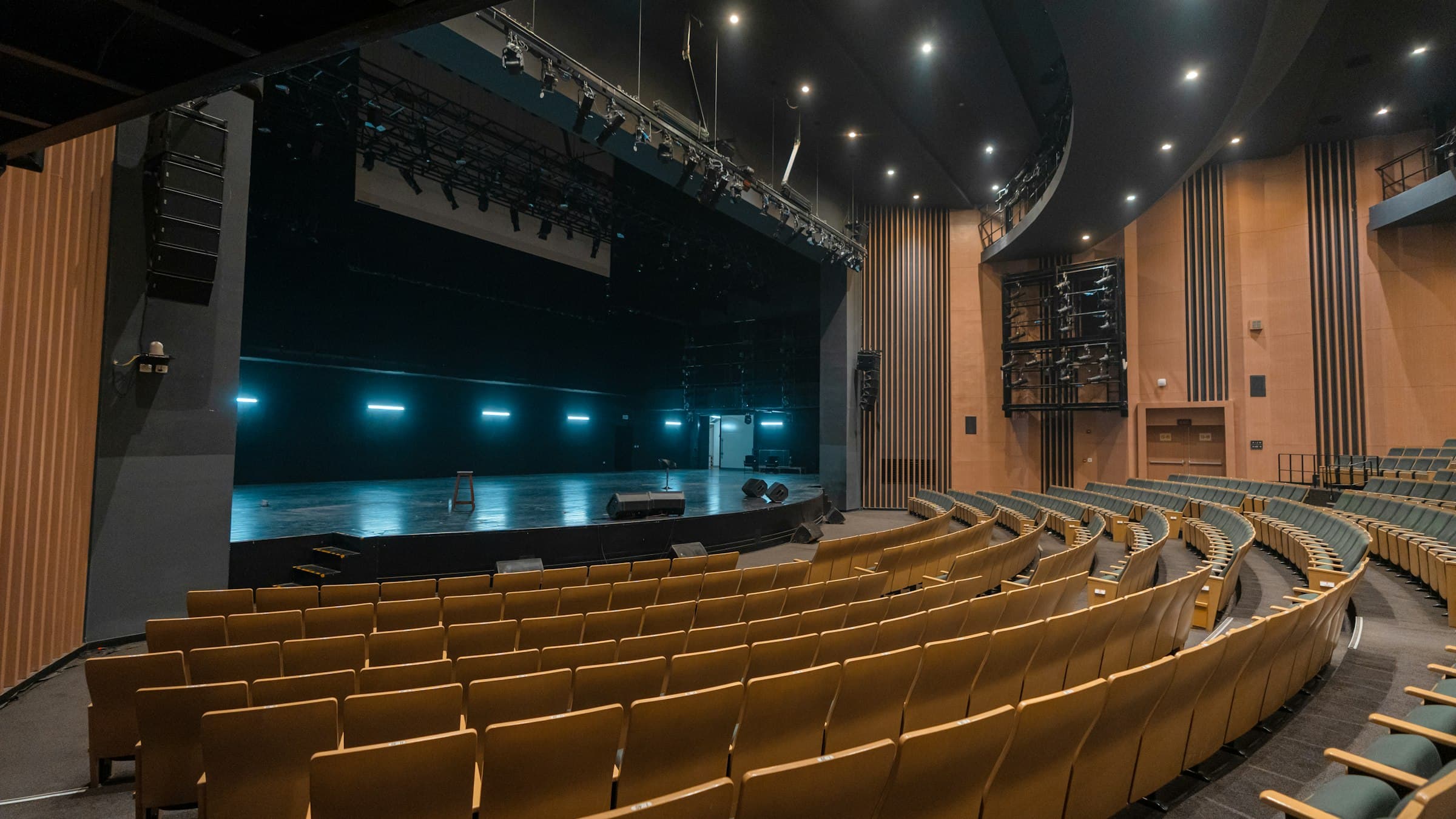
Bad weather or a large guest list can move a ceremony into a sports hall, cultural centre or school auditorium. Indoors the challenge is reverberation rather than volume: hard walls and high ceilings quickly destroy speech intelligibility. Aim loudspeakers at the audience rather than the walls, keep levels moderate and add fill speakers for the back of the room instead of pushing the main system.
Stadium and parade ceremonies
Stadium announcement systems are designed for speech and often struggle with music for mass displays. A portable system facing the field, or time-aligned speakers along the stands, keeps performers on both ends of the pitch in sync. For parades, combine a VIP stand facing the route, an announcer position and several speaker points. On large sites, LED screens with live camera feeds help the back rows follow the ceremony; see our event production Turkey services.
Ceremony stage hire in Turkey: planning timeline
Start four to six weeks out with date, site, audience size and a draft programme. Approve the stage and PA layout three weeks out, collect music and LED content two weeks out, visit the site one week out, build the day before and rehearse on the morning of the ceremony. BernStage dispatches ceremony stages, PA and LED from Istanbul to all 81 provinces; read about stage rental across Turkey's 81 provinces, and see platform options on our stage rental Turkey page.
If you also need the programme, invitations and running order handled, our partner Ourspace takes care of event organisation. Share your date, site and programme through our quote form and we will plan the ceremony stage, sound and screens as one production.