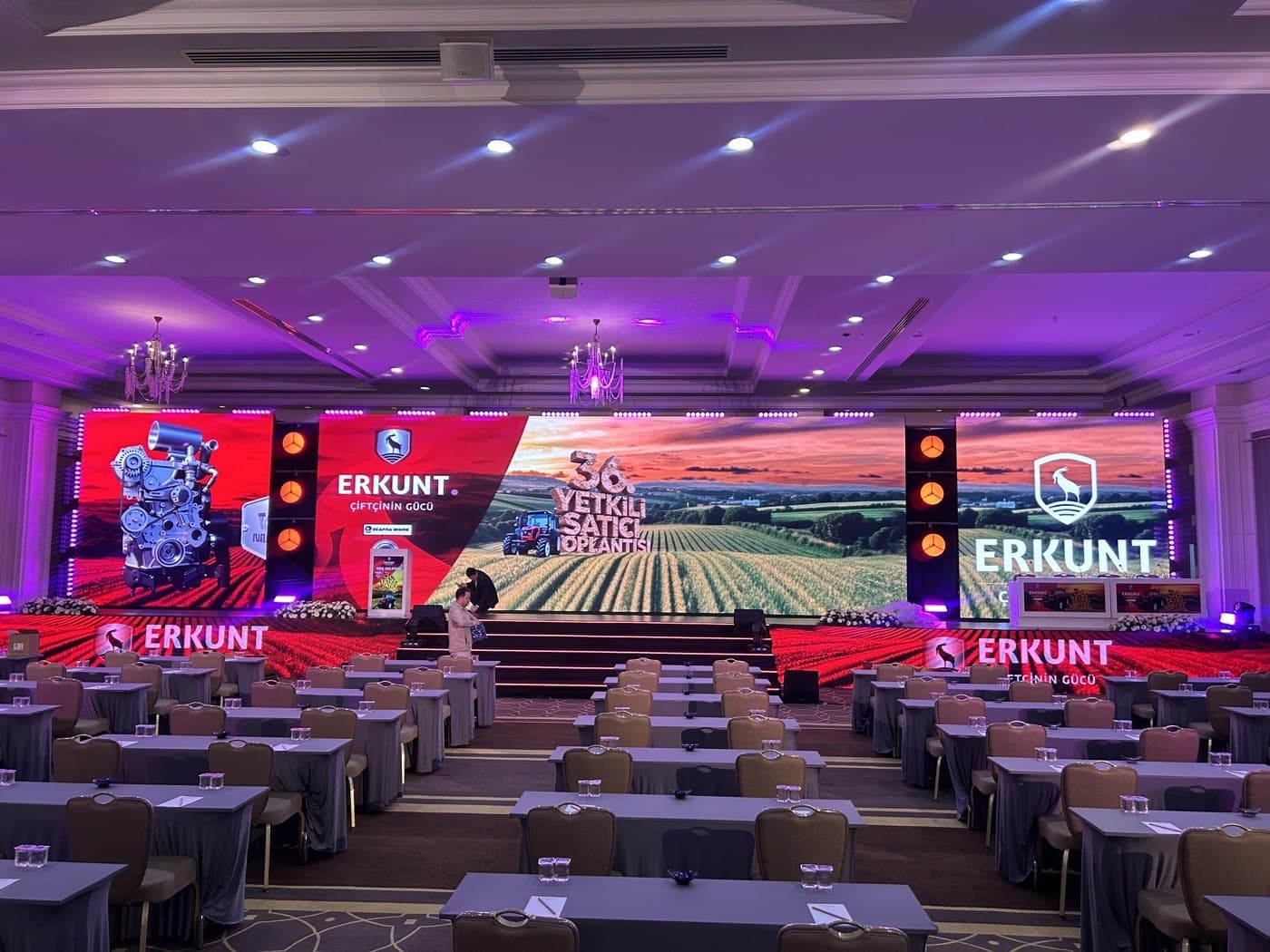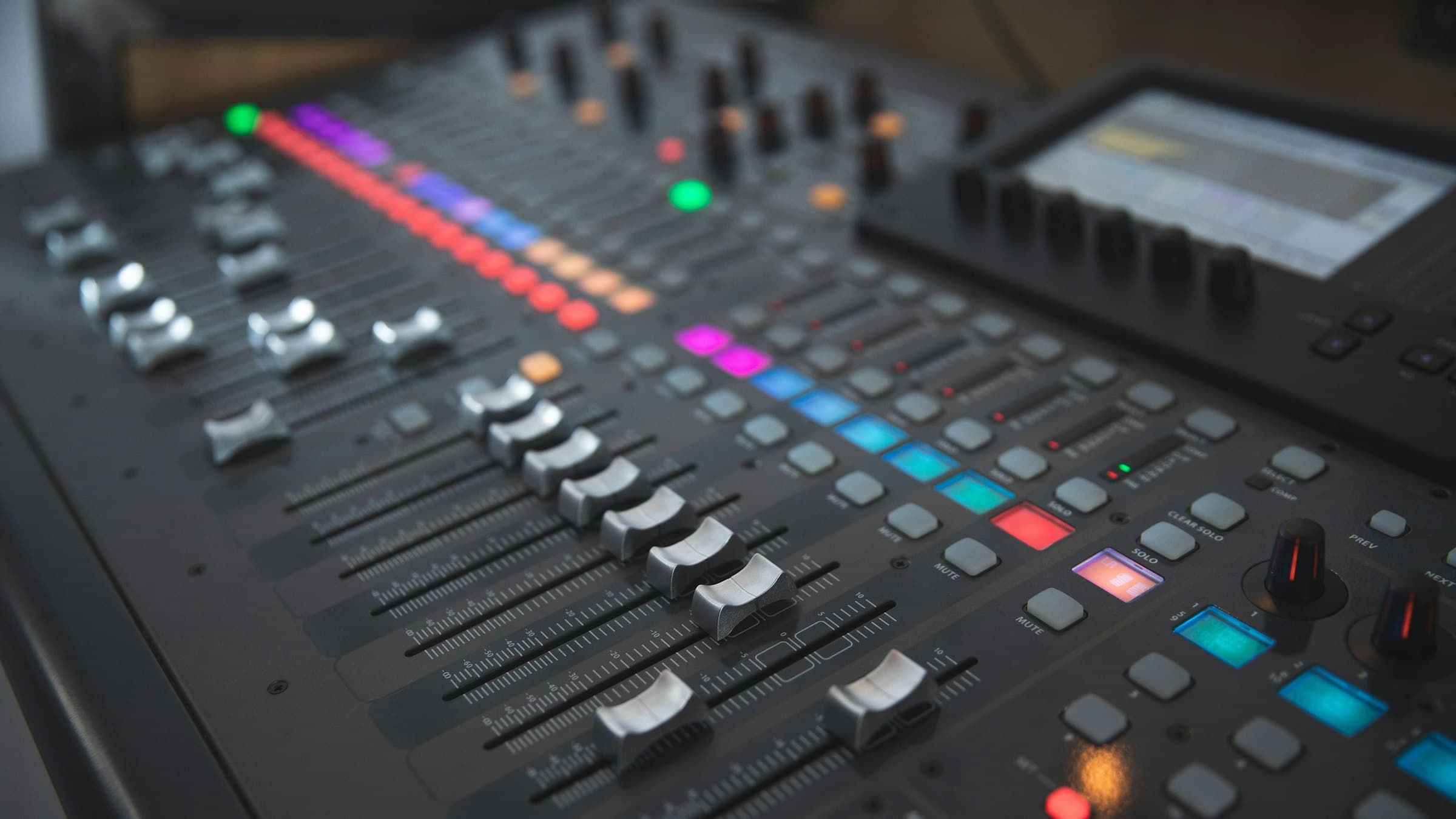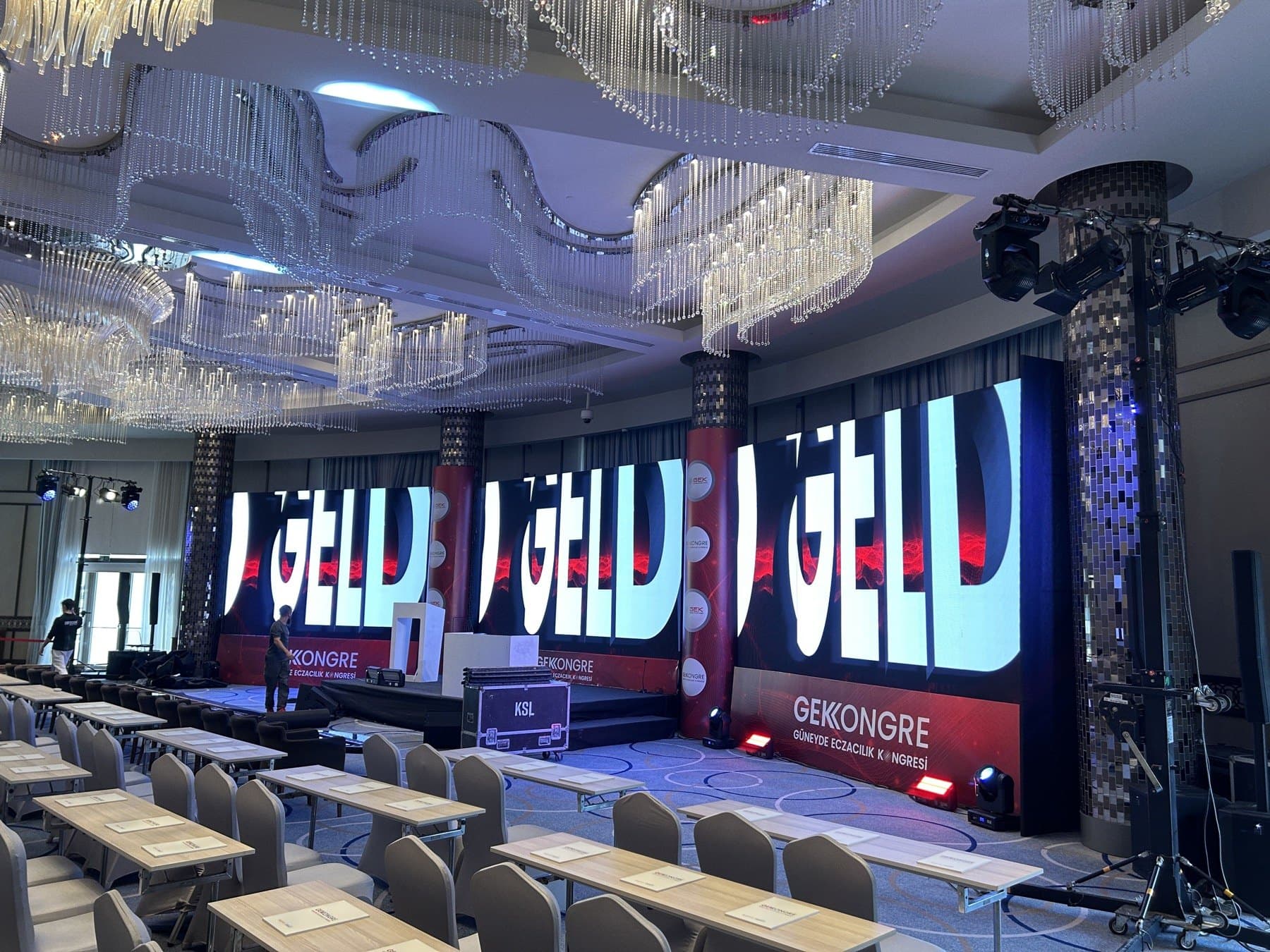
Wireless microphone rental in Turkey sits on almost every technical list, from a board meeting in Istanbul to a gala in Belek, yet it is often the last item anyone thinks about. That is risky, because a dropout, a crackle or a mic that never switches on is the technical fault an audience notices first. This guide explains which microphone type suits which moment, how to count channels, why RF frequency coordination matters and what to check in a rental quote.
Handheld, headset or lavalier: which one when?
The short answer: handhelds for Q&A and speakers who walk on and off, headsets for presenters who move and use their hands, lavaliers for panels and on-camera interviews, and a wired lectern mic for formal speeches.
| Type | Best for | Strength | Watch out for |
|---|---|---|---|
| Handheld | Hosts, Q&A, singers, toasts | Highest gain before feedback, easy to pass around | Depends on the speaker holding it close |
| Headset | Presenters on the move, trainers, keynotes | Hands free, constant mouth distance | Needs correct fitting; choose a skin-tone model |
| Lavalier | Panels, interviews, broadcast and film | Discreet and comfortable | Lower gain, feedback risk in large rooms |
| Wired lectern | Protocol speeches, podium talks | No batteries, no RF, most reliable | Speaker is tied to the lectern |
Handheld microphones
The capsule sits close to the mouth, so handhelds deliver the most level before feedback even in a large ballroom. They are the natural choice for award presenters, audience questions and anyone singing. Their weakness is the user: a speaker who drops the mic to chest height or cups the grille changes the sound instantly.
Headset microphones
A headset hooks over the ear and holds the capsule at a fixed distance near the mouth. Level stays consistent when the presenter turns their head, and their hands stay free for a clicker or a product. Skin-tone models are almost invisible on camera. They need to be fitted properly backstage by an audio assistant.
Lavalier microphones
Lavs are small and discreet, ideal for panels, interviews and filmed content. Because the capsule is further from the mouth, gain is limited and loud levels in big, reverberant rooms are harder to reach. Clip them mid-chest, roughly a hand's span below the chin, away from rustling fabric and jewellery.
Why the wired lectern mic still matters
No batteries and no radio interference make a wired lectern microphone the most reliable option for keynote and protocol speeches. Keep one on the lectern even when everything else is wireless. For delegate systems and conference setups, see our guide to conference AV in Turkey.
How many wireless channels do you need?
Every transmitter, whether a handheld or a beltpack for a headset or lav, is one channel, and every channel in use at the same time needs its own frequency. The real question is not how many speakers you have, but how many people will be wearing or holding a live mic at once, and how much changeover time there is between them.
| Event | Typical requirement |
|---|---|
| Small meeting or training | 1 headset or lav, 1–2 handhelds for Q&A, lectern mic |
| Panel session | One lav or handheld per panellist and moderator, plus 2 handhelds for the floor |
| Gala or awards night | 2 headsets or handhelds for hosts, 2 handhelds for presenters and winners, lectern |
| Product launch | Headsets for hosts and speakers, extra channels for the stage show |
| Wedding | Ceremony mic plus 2 handhelds for speeches |
Always plan at least one spare channel, and keep a ready backup for critical speakers. In fast-moving programmes, headsets and lavs are fitted backstage in advance, so you may need as many channels as there are people waiting with a mic on.
RF frequency coordination: why it matters
Wireless mics work on radio frequencies, and every system on site can affect the others. Frequency coordination means scanning the radio environment and building a plan in which all transmitters coexist without interfering with each other or with other users. A professional audio team will:
- Scan the site: on build day, measure which frequencies are already occupied at the venue.
- Calculate a compatible set: multiple transmitters create intermodulation products, new interference frequencies that grow more complex as channel counts rise. Frequencies are chosen as a compatible set, not one by one.
- Coordinate with other users: in-ear monitors, intercom, interpretation systems, broadcast crews and events in neighbouring hotel ballrooms may all use wireless equipment.
- Stay legally compliant: the frequency ranges available for wireless microphones are set by national regulation and differ between countries. Equipment used in Turkey must operate within the permitted ranges, so systems brought from abroad are not always usable.
For international productions, this last point is the most common surprise. If a touring act or speaker plans to bring their own wireless kit, share the model and frequency range with your local supplier well before travel. Using locally sourced, coordinated systems is usually simpler.
Digital or analogue?
Many current wireless systems transmit digitally, which, depending on the model, can mean cleaner audio, more robust transmission against some types of interference and more channels in the same spectrum. Analogue systems remain common and reliable with a good frequency plan. Mixing the two on one show is fine as long as the coordination accounts for both. If performers use in-ear monitors, remember that latency adds up when several digital devices sit in the same chain (digital mic, digital console, digital IEM), so the total should be kept low. In-ear monitor transmitters are part of the same RF plan as the microphones.
Antennas and signal reliability
Receiver antennas are placed with line of sight to the stage, above the audience and away from metal structures. On larger stages, directional antennas and antenna distribution feed several receivers from one antenna system. LED walls, digital processors and dense cable runs can generate interference, so receivers are kept clear of them. During rehearsal, the audio team walks every route a presenter may take, including stage edges and paths into the audience.
Batteries, backups and backstage routine
- Fresh or fully charged batteries before every show, with a planned change during breaks on long days.
- Battery status monitored from the mixing position on systems that support it.
- Every transmitter labelled with the user's name, matching the console label.
- An audio assistant (A2) backstage fitting mics, line-checking and tracking the running order.
- Handhelds cleaned between users, with replaceable windshields where needed.
At ballroom galas the pace makes this routine essential; our hotel gala dinner production guide covers the wider setup.
What to check in a wireless microphone rental quote
- Are mic types chosen to match the running order?
- Are spare channels and backup transmitters included?
- Is frequency scanning and coordination part of the audio team's scope?
- Has antenna distribution or remote antenna placement been considered?
- Are batteries or a charging system included?
- Will an audio operator and A2 stay on site throughout?
Microphones should be planned with the rest of the audio system rather than as a separate order; our sound system rental in Turkey page covers the PA side. BernStage supplies wireless systems with frequency planning and on-site operators as part of our event production in Turkey, from corporate meetings to concerts; our corporate event production guide shows how audio fits into the wider plan. Share your running order and speaker count through our quote form and we will propose the right microphone plan.