Lighting shapes how an audience feels about an event more than almost anything else. The same stage, artist and sound system can feel spectacular or forgettable depending on how they are lit. Event lighting design is not about hanging as many fixtures as possible; it is about knowing what each light does and using it to tell a story. This guide explains the core concepts in plain language, so event planners and agencies can brief a production team with confidence, whether the event is in Istanbul, Antalya or anywhere else in Turkey.
The three jobs of event lighting
Every lighting design answers three questions. Visibility: can the audience and the cameras clearly see the people on stage? Focus: where should the audience be looking right now? Mood: what should this moment feel like, euphoric, tense or intimate?
At a corporate conference, visibility comes first: faces must be clear and colours natural. At a rock concert, mood leads, and movement, colour and contrast are part of the show. At weddings and galas the balance shifts through the evening. Deciding where your event sits on that scale naturally shapes the equipment list.
Moving heads: spot, beam and wash
A moving head is an intelligent fixture whose direction, colour and shape can be controlled remotely. It is the backbone of modern staging, and comes in three main families:
| Fixture type | Light character | Typical use |
|---|---|---|
| Spot (profile) | Hard-edged light shaped with gobos and prisms | Projecting patterns, picking out performers, design detail |
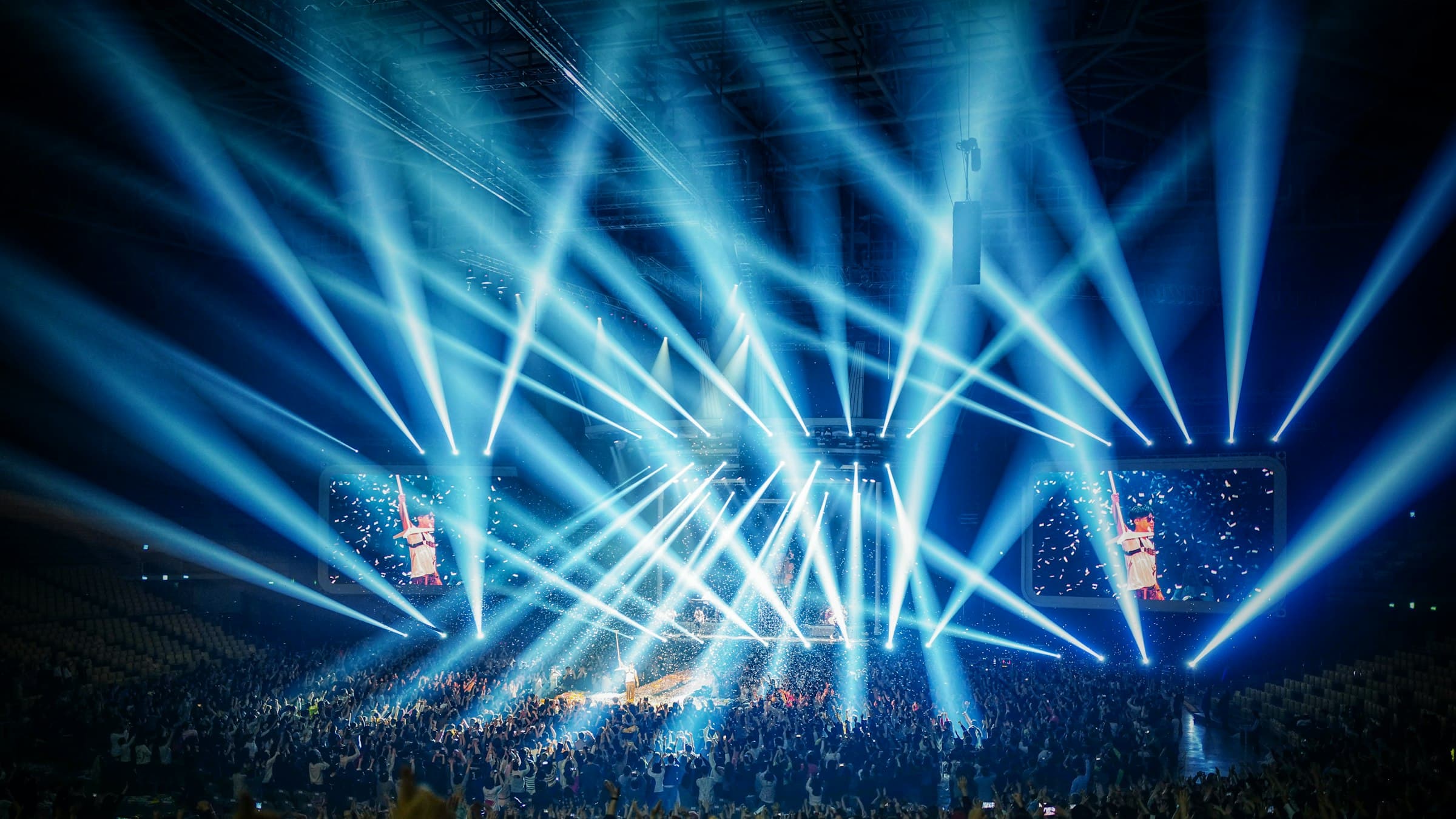
| Beam | Very narrow, intense shaft of light | Visible “sticks” of light in the air, high-energy concert moments |
| Wash | Wide, soft, even colour | Filling the stage with colour, lighting performers and scenery |
| Hybrid | Combines spot, beam and wash features | Versatile rigs with a limited fixture count |
Fixtures from manufacturers such as Clay Paky and Martin are industry standards for output, colour mixing and speed. The right mix depends on the event: concerts lean on beams, galas on washes and spots. Lighting also has to work with the LED wall: a presenter standing in front of a bright screen turns into a silhouette without enough front light, so lighting and video teams should agree on colour temperature, brightness and palette together. Browse our stage rental in Turkey options to see how lighting truss and staging come together.
Blinders, strobes and effect lights
Alongside moving heads, effect fixtures give a show its character:
- Blinders: very bright, warm lights pointed at the audience for short bursts, connecting stage and crowd at the peak of a song.
- Strobes: short, intense flashes for electronic music and high-energy moments. Use them sparingly and warn audiences where appropriate, as strobe can affect people with photosensitivity.
- LED bars and pixel fixtures: outline the stage structure and can be programmed almost like video content.
- Follow spots: operator-driven lights that track a performer across the stage.
- Key light: the foundation of visibility, essential whenever cameras are filming.
Haze: what makes light visible
Beams of light are invisible in clean air; you only see where they land. A haze machine fills the air with a fine, even layer of particles so the path of every beam becomes visible. Those dramatic shafts of light at concerts only exist because of haze.
Haze is not fog. Fog is dense and billowing, used for short bursts; haze is almost invisible, continuous and even. In hotels, haze can trigger smoke detectors, so always agree its use with the venue in advance. Outdoors, wind disperses haze quickly, so you need stronger machines or several units placed upwind.
Lighting consoles: grandMA, Avolites and programming
The lighting console is the brain that controls every fixture’s position, colour, intensity and effects, over DMX or network protocols such as Art-Net and sACN. The most common professional platforms are grandMA and Avolites.
Lighting designers usually work in one of two ways:
- Cue-based programming: every moment of the show is stored as a cue and triggered in sequence. Ideal for corporate events, theatre and award ceremonies.
- Busking: the operator combines pre-built palettes of colour, position and effects live, following the music. Best for concerts and DJ sets where the set list may change.
On larger productions, programming starts in pre-visualisation software before load-in. This shortens on-site programming time and lets clients approve the look before the show.
Timecode-synchronised shows
When an opening film, music, lights, LED content and effects all need to hit together to the frame, timecode is the answer. Timecode (usually SMPTE/LTC or MIDI timecode) is a time signal sent from the audio or video playback system. The lighting console listens to it and locks each cue to an exact moment. It is typically used for:
- product launch reveals where video, lighting and effects must hit together,
- concert songs played to a click track that should look identical every night,
- pyrotechnics, cold spark or confetti cued to a specific beat.
Timecode shows need more preparation and rehearsal, but they deliver the same precise result every time.
From design to stage: getting a quote
Good lighting is designed together with stage dimensions, rigging, LED placement and power. Most fixtures hang on truss, so lighting and rigging plans must evolve together. Cost is driven by fixture count and type, programming time, timecode requirements, the number of build days and crew size.
BernStage designs and operates lighting for everything from hotel concerts to open-air festivals. Tell us about your event, venue and ambitions and we will propose a lighting concept that fits. Explore our concert production in Turkey, read about corporate event production, or send your brief via the quote form.