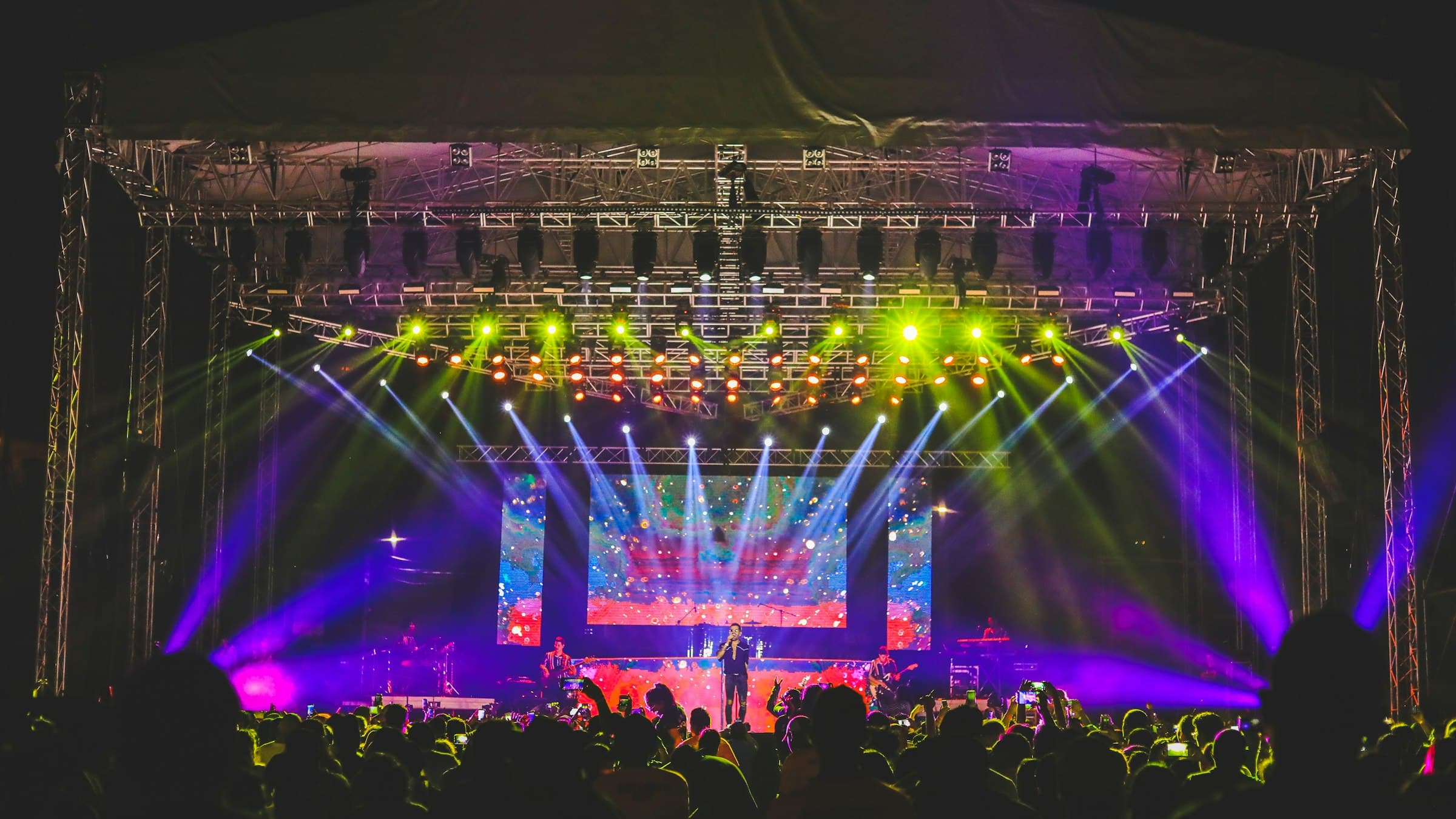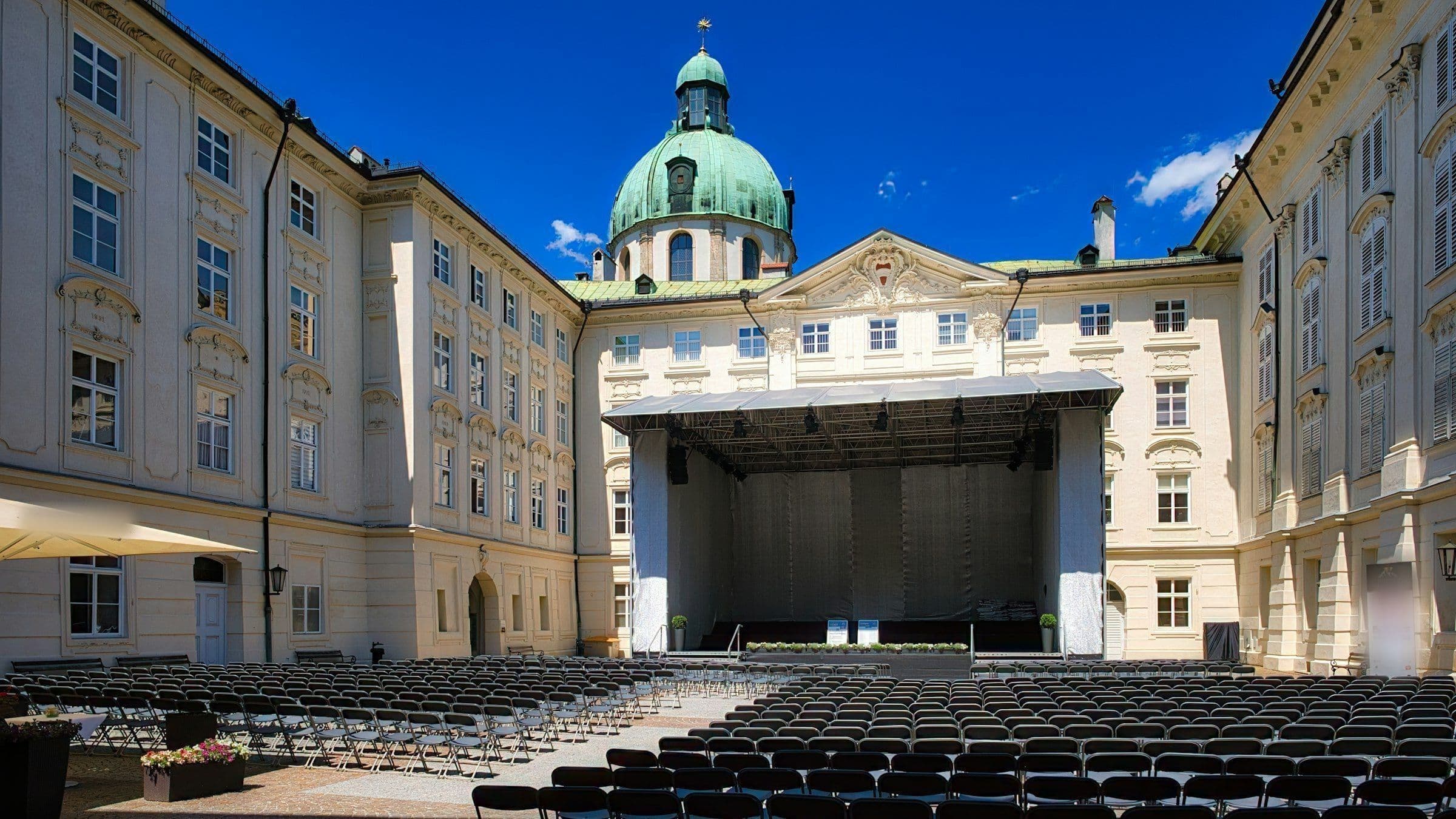
An outdoor stage roof does two jobs at once: it protects artists and equipment from sun, rain and dew, and it is the structure from which sound, lighting and LED are flown. For concerts, festivals, public events and large galas in Turkey, choosing the roof is the decision that most shapes the look of the stage, the build time, the safety plan and the budget. This guide is for international promoters, agencies and production managers planning open-air events in Istanbul, Antalya, Bodrum, Izmir and beyond: the main roof types, how span and load are specified, how wind and weather are managed, and how the build runs.
When do you need a roof stage?
A roof stage is a temporary structure made of a deck, roof towers, a roof grid and a cover. Outdoors, you will usually need one if:
- PA, moving lights or an LED wall will be flown above the stage;
- the show runs into the evening and lighting matters;
- rain, dew or strong sun is possible; on the Turkish coast, strong summer sun alone makes this the norm;
- the artist rider specifies a covered stage;
- the event runs over several days and equipment stays on stage overnight.
For a short daytime ceremony or a small acoustic set, a portable deck with a few ground-supported truss towers may be enough. See our guide to portable stage and riser hire.
Outdoor stage roof systems compared
| Roof system | How it works | Strength | Typical use |
|---|---|---|---|
| Ground support truss roof | Roof grid lifted by motors on four or more truss towers | Flexible size, good flying capacity, also works indoors | Mid-size concerts, corporate outdoor events |
| Arch and dome roofs | Curved truss with a tensioned cover | Distinctive look, quick build | Small to mid concerts, private events |
| Mobile trailer stage | Vehicle-mounted stage and roof that unfold hydraulically | Very fast build, small crew | Short municipal events, tours |
| Large festival roofs | Scaffold or heavy truss structures with wide spans | Very high load capacity, wide openings | Major festivals, stadium shows |
The deciding factors are span and clearance, total flown load, build time, site access for trucks, ground conditions and budget. For our staging range, see stage rental Turkey.
Span, clearance and load capacity
Three dimensions define a roof: span between towers, depth, and clearance from deck to the underside of the grid. The span should be wider than the deck and any upstage LED wall; the clearance must leave room for lighting trusses, video and PA above the performers.
The roof's load capacity comes from the manufacturer's technical data and is a hard limit. At quote stage, list everything that will hang: PA and flying frames, lighting trusses and fixtures, LED modules and their support, motors, cables, power distribution and set elements.
On many shows the PA is flown from separate PA wings beside the stage rather than from the roof. That takes weight off the roof and lets the sound team position the arrays independently. LED walls deserve special attention: they add wind area as well as weight, so a flown screen must be assessed for both. Our article on truss and rigging safety covers motors and flying in more detail.
Wind, rain and sun: the weather plan
Wind action plan
Every roof system has manufacturer-defined wind limits. On site, wind speed is monitored with an anemometer and a written, staged plan is followed: at one level the crew is alerted; at a higher level side and back scrims and banners that catch wind are dropped; as the limits approach, the show is stopped and the stage area cleared. Agree in advance, with the promoter, who makes the call. In coastal areas like Antalya, Bodrum and Izmir, afternoon sea breezes can be noticeably stronger than morning conditions, so plan rehearsals and changeovers with that in mind.
Rain
The cover protects the deck, but driving rain needs side walls, equipment covers and drainage at the deck edges. Water pooling on the cover adds load, so the membrane must be tensioned and pitched, and checked during rain. Do not forget a tent or cover for front of house.
Sun and heat
Summer sun on the Turkish Riviera is a real factor for daytime soundchecks. LED walls, consoles and dimmers in direct sun can overheat, and crews need shade and water. Stage orientation relative to the sun should be considered at the planning stage. For regional details, see our event production Turkey page.
Ground, ballast and anchoring
- Asphalt and concrete: usually ideal, but check for voids, manholes and buried services.
- Grass and soil: needs load-spreading boards; rain softens the ground and complicates truck access.
- Sand and beaches: needs special ground plates and wider load spread; vehicles struggle to get close.
- Slopes: the deck and towers must be levelled and the slope reflected in leg and stair plans.
Roof towers are held against wind with ballast (concrete blocks or water tanks) or ground anchors. Which method is used depends on the surface and on what the venue allows; heritage sites and many public squares usually do not permit anchoring, so ballast only. The amount and position of ballast must come from the manufacturer's technical data and, where required, a competent structural engineer's calculation, never from estimates.
How an outdoor stage is built
- Site survey: ground, access route, truck parking, power, audience area and FOH position.
- Drawings and load plan: stage, roof, PA wings, LED and barrier layout, plus a hang list.
- Ground preparation: tower and leg points marked, ground plates placed.
- Deck and roof: deck, towers and grid built in the order the system's instructions require; the grid is usually assembled at ground level and lifted on motors.
- Technical fit-out: sound, lighting and LED flown, power distributed.
- Checks and rehearsal: ballast, connections and the wind plan verified; soundcheck and rehearsal.
- Show and strike: crew on call throughout; strike in reverse order with safe working light.
For a mid-size roof stage the build usually starts the day before the show; large festival structures can take several days. For generators, barriers and the rest of the site, see our outdoor event technical checklist.
Permits, venue rules and common mistakes
For roof stages in public squares and festival sites, the authorities may ask for a site plan, technical information on the stage and roof, and safety measures as part of the permit process. Permits sit with the promoter or local agency; the technical supplier prepares the supporting documents, such as dimensions, load plan, ballast layout and the wind action plan. Hotel gardens, beach clubs and private estates add their own rules on vehicle access, ground protection, noise hours and build times. Resorts in Antalya, Belek and Bodrum may ask for builds to avoid guest traffic, which can shape the schedule as much as the structure does.
The most common mistakes are easy to avoid:
- choosing a roof by size rather than by the load it must carry;
- ignoring clearance, so the LED wall and lighting trusses do not fit;
- sharing ground information late, so soft soil or a slope delays the build;
- leaving the wind plan unwritten, with no agreed decision-maker;
- not planning a night-time strike with light, crew and truck access.
If you are planning an open-air show in Turkey, send the site details, date and technical requirements through our quote form and we will propose a roof, stage and technical package under one plan.