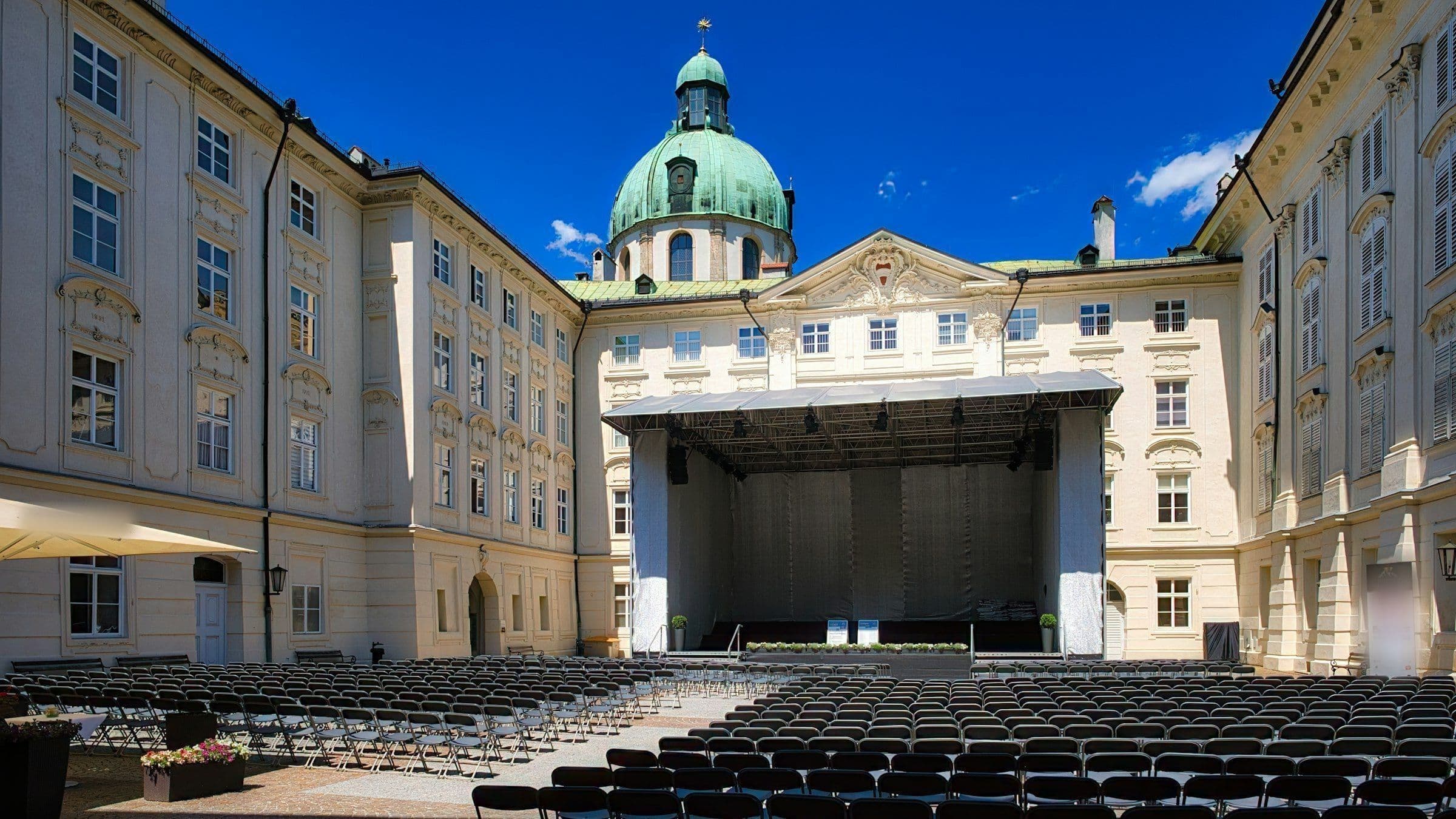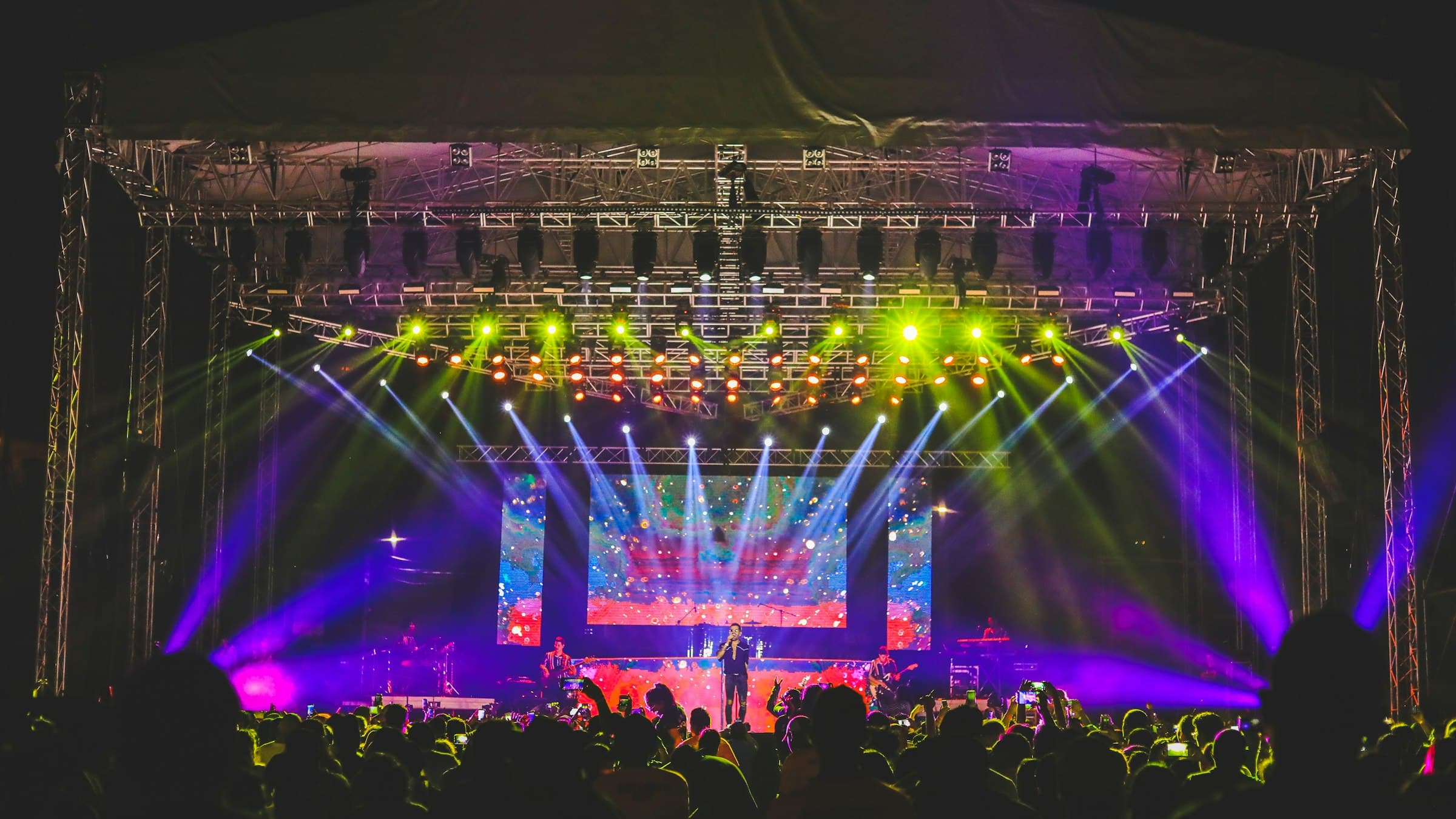
For an international planner, the stage build is the part of an event in Turkey that is hardest to picture from a distance: you approve drawings and a quote, then arrive at a finished stage. What happens in between decides whether doors open on time. This guide walks through a typical build as our crews run it, from the site survey to the last truck leaving, with realistic timings and the questions you should ask your Turkish production partner.
How long does a stage build take?
A stage build is the delivery, assembly, rigging, cabling and testing of the stage deck, roof or truss, sound, lighting, LED and power distribution, ending with a show-ready system. Typical durations, assuming good access and reasonable weather, are:
- Small indoor riser with lectern and basic PA: a few hours.
- Hotel ballroom gala with truss, LED wall and lighting: usually one full day, or a day and a half including rehearsal.
- Mid-sized outdoor roof stage: one to two days.
- Large concert or festival stage: two to three days, plus a rehearsal day.
Load-out normally takes between a third and a half of the build time and usually starts as soon as the audience has left.
Before the build: survey, drawings and schedule
A smooth load-in is planned weeks ahead. The production team visits the venue or studies its technical specifications, floor plans and photos, checking:
- Ground type and load-bearing capacity: asphalt, concrete, lawn, sand or a timber ballroom floor.
- How close trucks can get, plus ramps, lifts and door dimensions.
- Ceiling height and approved rigging points indoors; slope and wind exposure outdoors.
- Power: venue supply capacity or the need for generators.
- Audience flow, emergency exits, backstage and the front-of-house (FOH) position.
The survey becomes a technical drawing showing the stage footprint, rigging points, PA and lighting positions and cable routes. Artist requirements from the technical rider are added at this stage. Finally, an hour-by-hour build schedule is agreed with the venue: truck arrival times, crew calls, soundcheck and rehearsal slots.
The stage build, step by step
Every project differs, but a professional build follows the same logic: ground and structure first, flown systems second, fine-tuning last.
- Marking out: stage centre, downstage edge, roof legs or truss towers and FOH are marked on the ground.
- Load-in: trucks are unloaded in order: stage and roof, then truss, then audio, lighting and video, so the dock never jams.
- Deck: legs and decks are assembled and levelled; skirting, stairs, handrails and ramps follow.
- Roof or truss: outdoors, the towers go up and are ballasted and guyed as the manufacturer and structural calculations specify, then the roof grid is assembled on the ground and lifted on hoists. Indoors, truss is flown on chain hoists from venue-approved points.
- Flown systems: lighting fixtures are hung while the truss is at working height near the floor; LED panels go onto their own hanging bars and line array cabinets into their own fly frames. Each system is then raised to trim on hoists.
- Power and cabling: distribution is installed, signal and power are routed separately, and cable ramps cover every audience crossing.
- Focus, programming and tuning: lights are focused and programmed, the PA is measured and tuned to the space, and the LED wall is calibrated.
- Line check, soundcheck, rehearsal: every channel is checked, then artists and presenters rehearse against the running order.
Why sequence matters
The costliest mistake on a build is trades working on top of each other. Nobody carries decks under a truss that is being raised. A good production manager keeps stage, audio, lighting and video crews moving in parallel without crossing into each other's work zones.
Protect the rehearsal slot
Rehearsal is the part of the schedule most often squeezed, yet it is the only window where problems surface before the audience does. For corporate shows, run presentation changes, video playback, mic swaps and lighting cues at least once in running order. For concerts, leave a gap between soundcheck and doors so the crew can reset the stage calmly.
Who is on the crew?
| Role | Responsibility |
|---|---|
| Production manager | Schedule, venue liaison, safety decisions, single point of contact |
| Stage manager | Deck, backstage, on-stage changeovers during the show |
| Riggers | Truss, hoists and hanging points within load limits |
| Audio team | PA build, system tuning, FOH and monitor desks |
| Lighting team | Fixture rig, focus, console programming |
| Video team | LED wall build, calibration, playback and camera feeds |
| Electrician | Power distribution, earthing, generators |
| Stagehands | Loading, carrying and assembly support |
On small jobs some roles are combined; on concerts each department runs its own team. Our event production Turkey page outlines the full technical scope we cover.
What makes a build faster or slower
- Access: a truck parked beside the stage versus equipment pushed a hundred metres across a hotel terrace can add hours.
- Ground: slopes and soft surfaces need packing, base plates and more levelling time. Sand and lawn require load-spreading boards.
- Weather: roofs are not lifted when wind exceeds the manufacturer's limit, and exposed electrical connection work stops in rain. Build in a half-day buffer outdoors.
- Venue rules: hotel quiet hours, guest traffic and shared service lifts slow things down; some venues only allow night work.
- Late changes: moving the LED wall or resizing the stage after the build starts usually means undoing work.
The fastest builds share three features: early venue access, a design frozen before load-in, and one supplier for stage, sound, lighting and LED, which means one trucking plan and one build order. If you are still deciding dimensions, see our stage size guide.
Safety on site
- The build area is closed to the public and to non-crew; nobody stands under a load being lifted.
- Hard hats, safety boots and gloves are standard; anyone working at height wears a full-body harness clipped to a suitable anchor.
- Truss spans are loaded within the manufacturer's load tables and hanging points within the venue's rated capacities, with secondary safety steels fitted.
- Outdoors, wind is monitored continuously. Thresholds come from manufacturer data and structural calculations and are written into a wind action plan before the show; as limits approach, side scrims come down and, if needed, the show is paused and the stage area cleared.
- Power distribution is checked for earth-leakage protection and earthing.
Our article on truss and rigging safety goes deeper into flown systems in ballrooms and arenas.
Planning the load-out
Load-out runs in reverse: cables and on-stage kit first, flown systems lowered, then truss, roof and finally the deck. Because it usually happens at night, lighting, crew rotation and truck order must be planned in advance. Confirm with the venue the latest hand-back time, when the audience will be fully cleared, which gate trucks use and who removes waste and set materials.
Planner checklist for events in Turkey
- Get build and strike hours in writing in your venue contract.
- Share venue specs, floor plans and power data with your production partner early.
- Send artist and speaker riders several weeks before load-in.
- Lock the rehearsal slot and tell everyone involved.
- For outdoor events, agree a weather contingency.
- Appoint one decision-maker on site.
BernStage handles stage rental in Turkey together with sound, lighting, LED and rigging under one build plan, dispatched from Istanbul to venues anywhere in Turkey. Send your date, venue and requirements through our quote form and we will reply with an itemised proposal and a draft build schedule.