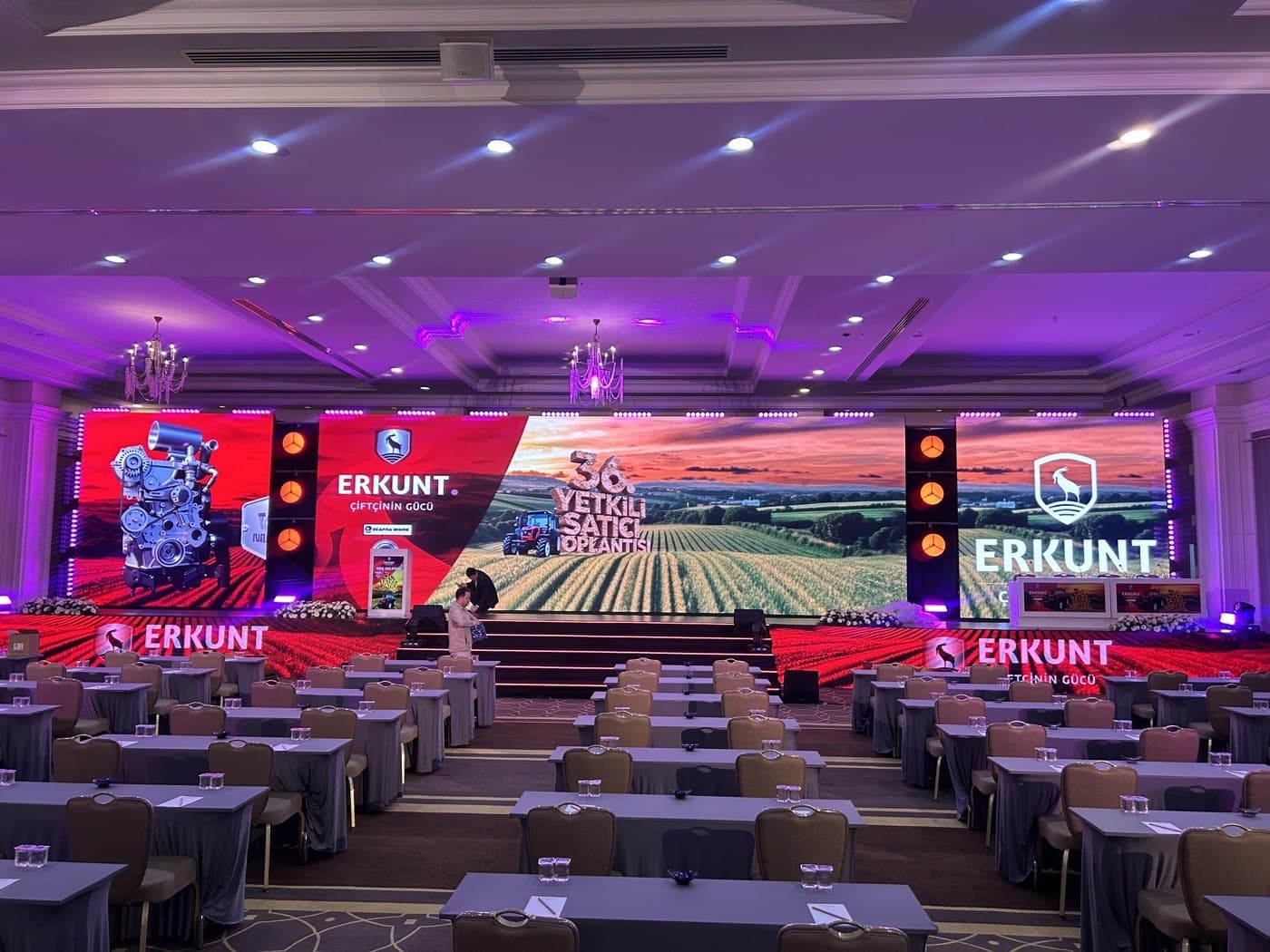
The right event sound system is the difference between a keynote everyone understands and one the back rows politely give up on, or between a concert that hits every corner of the venue and one that is painful at the front and muddy at the back. If you are organising an event in Turkey and specifying audio from abroad, this guide explains how to match loudspeakers to audience size, venue and content, so the conversation with your local supplier starts from the right place.
Start with the job, not the wattage
"How many watts do we need?" is the wrong first question. Power ratings alone say very little. What matters is what the system has to reproduce and where. Most events fall into one of three groups:
- Speech-led events: conferences, award ceremonies, product launches. Intelligibility and even coverage come first; deep bass is secondary.
- Mixed speech and music: gala dinners, weddings, hotel entertainment. You need clear speech and enough low end for the dance floor.
- Concerts and festivals: high sound pressure, long throw and serious subwoofer support.
That classification drives every later decision, from loudspeaker type to the mixing console.
Many evenings combine all three. A corporate gala might open with speeches, move into an awards ceremony and finish with a live band or DJ. In that case the system is designed for the most demanding segment, the music, and run at a lower, speech-friendly level earlier in the night.
Line array or point source?
Point source loudspeakers radiate sound from a single cabinet with a fixed dispersion pattern. They are quick to deploy and cost-effective for meeting rooms, small ballrooms and audiences of a few hundred. Their limitation is distance: level drops off quickly, so reaching the back often means the front rows are too loud.
Line array systems stack multiple cabinets vertically so they behave as one controlled source. They project sound further with a smaller level difference between front and rear, and they keep energy off ceilings and walls. For large concerts, open-air shows and big ballrooms they are the standard. On these projects BernStage works with professional line array systems from Adamson and d&b audiotechnik.
Delays and front fills
In deep audience areas, delay speakers placed mid-audience extend coverage without pushing the main system harder. Front fills cover the first rows that sit underneath the main hangs. Both are inexpensive ways to achieve even sound.
Is a line array always required?
No. Installing a line array in a low-ceilinged hotel function room for a few hundred guests adds cost and can block sightlines. Equally, relying on pole-mounted point source speakers across a large open-air site leaves the back of the audience with weak, unclear sound. The right answer comes from looking at depth, audience layout and programme together.
Sound system guide by audience size
Use the table below as a starting point. Room acoustics, ceiling height and programme material will refine the final design.
| Audience | Typical event | Suggested approach |
|---|---|---|
| 50–150 | Meeting, seminar, small reception | Pair of point source speakers, optional compact sub |
| 150–500 | Gala, wedding, launch | Powerful point source or compact line array, subs, front fills |
| 500–2,000 | Large gala, corporate concert, resort show | Line array, subwoofer array, front fills, delays if needed |
| 2,000+ | Concert, festival, open-air event | Flown line array, cardioid sub array, delay towers |
An open-air party for 300 guests needs considerably more system than a 300-person conference in a ballroom, so treat these numbers as guidance rather than rules.
Subwoofers: how much bass is enough?
Subwoofers carry the low frequencies that give dance music and live bands their weight. In a speech-led conference they may be skipped entirely or used only for video playback and walk-in music. At concerts, placement matters as much as quantity: cardioid arrays reduce energy bouncing back onto the stage, and centre arrays give smoother coverage across the audience.
Outdoors, bass travelling into neighbouring areas is the main source of noise complaints. Resort hotels in Antalya and Belek often have strict level and curfew limits, so check them early and design the system to respect them.
Monitors and on-stage sound
What the audience hears is only half the story; performers need to hear themselves too. The two main options are:
- Wedge monitors: floor speakers aimed at the performer. Fast to set up and still preferred by many artists.
- In-ear monitors (IEM): wireless earpieces that reduce stage noise and deliver a personal mix. Shure and Sennheiser wireless systems are widely used.
For concerts, monitor requirements are usually listed in the artist's technical rider. Our article on what a technical rider is explains how to read one.
Consoles, microphones and channel count
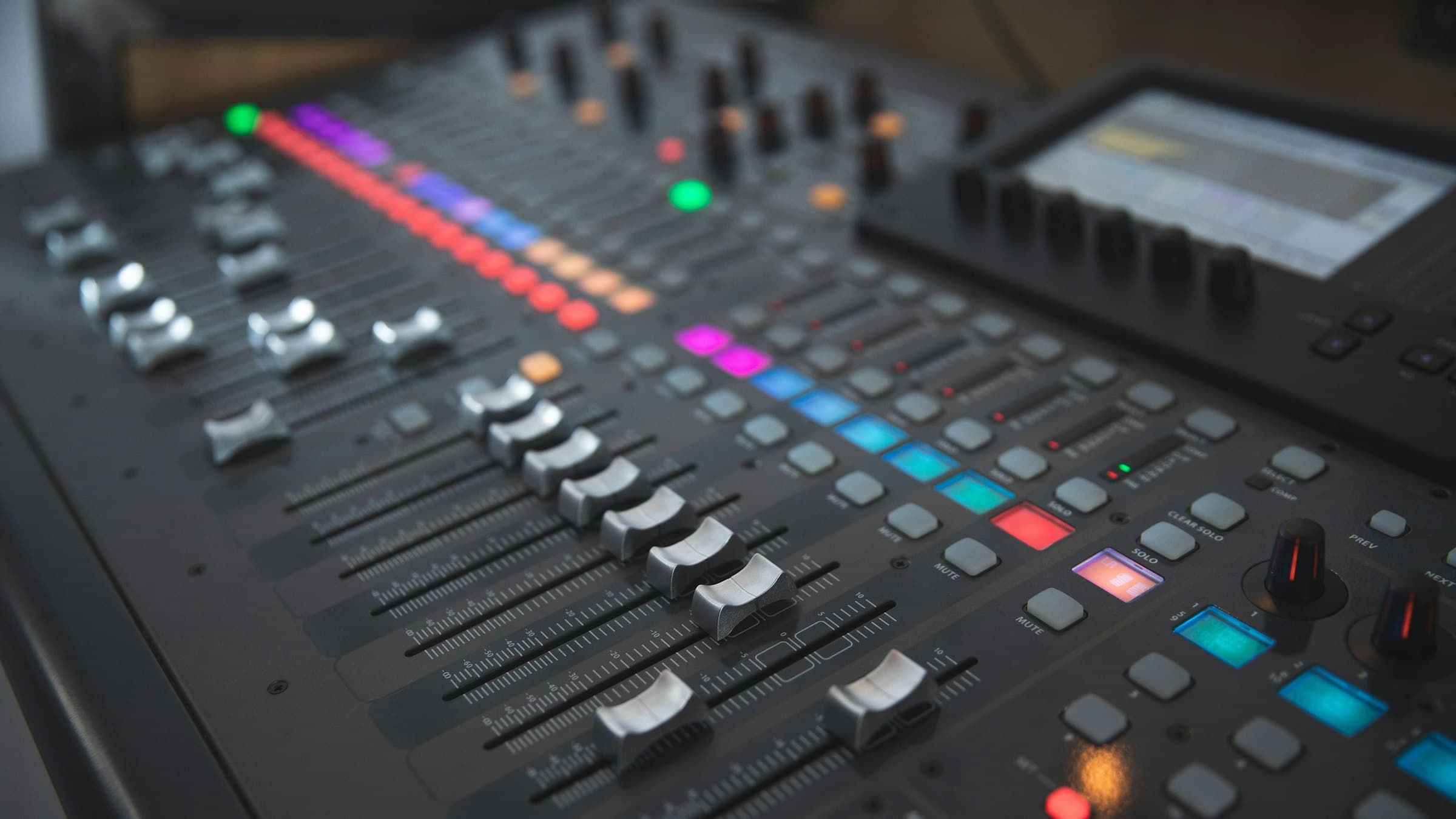
A sound system is more than speakers. Channel count is the sum of presenter microphones, instruments, playback and video sources. A small meeting may need a few wireless handhelds and a compact digital mixer; a live band calls for consoles such as the Yamaha CL5, DiGiCo or Allen & Heath and dozens of inputs. Wireless frequency coordination is essential in busy resort areas where many events run side by side.
Know the venue
High ceilings, glass walls and hard floors create reverberation; the answer there is better-directed sound, not more of it. Outdoors there are fewer reflections, but wind and distance shape coverage. Hang points, stage height, sightlines to LED screens and cable runs should all be settled during the site survey. Share floor plans and photos before requesting a quote whenever possible.
Once your needs are clear, our concert production Turkey and event production Turkey pages show how audio fits into a complete production with stage, lighting and video. Send us your date, venue and expected attendance and we will specify the right system. Get a quote.