If you are a promoter, agency or brand planning to organise a concert in Turkey, the creative side is usually the easy part. The hard part is turning an artist's rider, a venue you may never have visited and a local permit process into a show that opens on time and runs safely. This guide walks through the process the way a Turkish production crew sees it, from first venue check to the last truck leaving site, with practical notes for planners working from abroad.
How to organise a concert in Turkey: the short answer
Most concerts in Turkey follow the same eight steps:
- Concept and budget: audience, capacity, ticketing model (paid, invitation-only or free) and an overall budget envelope.
- Date and venue: indoor or outdoor, capacity and the venue's technical infrastructure.
- Artist contract: the technical rider and hospitality rider are attached to the agreement.
- Permits and safety: local authority approvals, security, medical cover and an emergency plan.
- Technical production: stage, roof, sound, lighting, LED screens, power and backline.
- Ticketing and marketing: sales channels, seated or standing layout, door times.
- Build and rehearsal: load-in, installation, sound check and production rehearsal.
- Show day and load-out: doors, show, egress and strike.
In practice these steps overlap. The venue choice depends on the minimum stage size and roof clearance in the rider, and permit applications need a site plan that only exists once the stage position is fixed. Bringing a local production partner in early saves weeks of back and forth.
A realistic concert planning timeline
For a mid-size or large concert, work backwards from the show date:
| When | What needs to happen |
|---|---|
| 4–6 months out | Hold date, venue and artist; draft budget; first call with a technical production company |
| 3 months out | Artist contract and rider; permit applications; reserve stage and roof |
| 6–8 weeks out | Site plan, power plan, security plan; tickets on sale |
| 2–3 weeks out | Final rider, technical drawings, build schedule and crew list |
| Show week | Load-in, stage and roof build, sound, lighting and video install, sound check |
| Show day and after | Doors, show, egress, overnight strike and site handover |
Summer weekends between June and September are peak season on the Turkish Riviera and in Istanbul. Large roof stages and experienced crews are booked first, so secure your technical options as soon as the date is confirmed.
Venues and permits in Turkey
Indoor venues such as arenas, congress centres and concert halls remove the need for a roof, but the ceiling rigging capacity, the loading door dimensions and the room acoustics become critical. Outdoor venues, including stadiums, amphitheatres, parks, beach clubs and public squares, bring wind, rain, power and truck access into the equation.
On a site visit, ask:
- Can trucks reach the back of the stage, and how much space is there to unload?
- Is the ground asphalt, concrete or grass, is it level, and are there drains or utilities beneath it?
- Is venue power sufficient, or are generators needed?
- How many days of build access are available, and are there quiet-hour rules?
- Where will audience entrances, emergency routes and the ambulance lane be?
Permit procedures differ by city and venue. Local authority approval, coordination with security services and fire and medical planning are part of most concerts, and these are normally handled by the local promoter or organiser. Applications usually require a scaled site plan showing the stage and audience areas, which your production company can supply. For outdoor shows, our outdoor event technical checklist covers wind, rain and power in detail.
Riders, backline and the concert stage
The technical rider is the most important attachment to the artist contract. It defines stage size, PA and consoles, monitors, backline and sound check time. Send it to your production partner before signing, so you know which items can be supplied as specified and which need an agreed alternative. Our guide what is a technical rider explains how to read one.
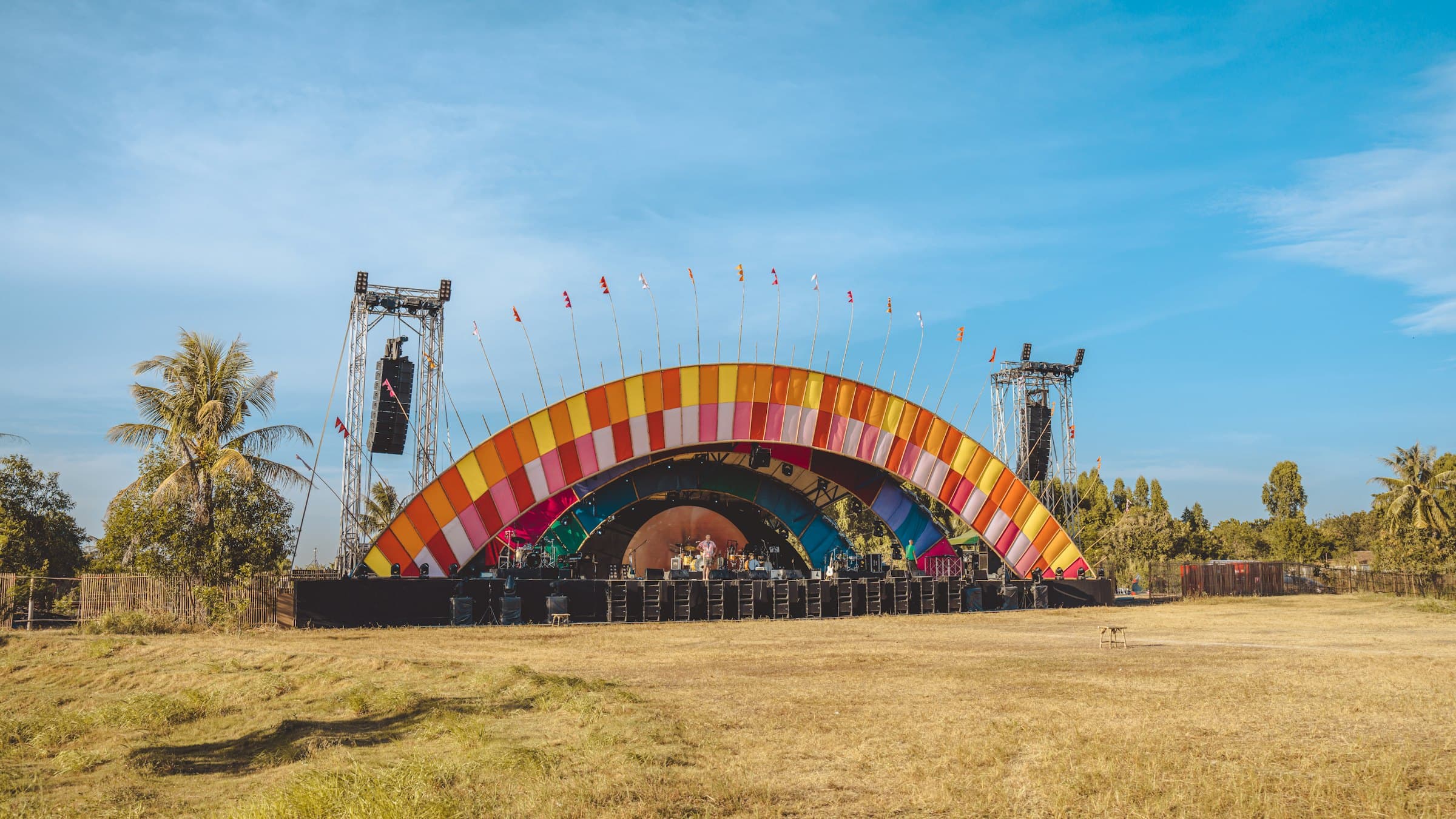
The stage must hold more than the band: the upstage LED wall, PA wings, lighting towers and rolling risers all need room. A deck around 12 x 10 m at 1.5–1.8 m height is a common starting point for a mid-size pop show, scaling up for larger line-ups. International acts often fly in with only instruments and a few key items, so drum kits, amplifiers and keyboard stands are typically sourced locally against the backline list. See our stage rental Turkey options for roof and ground-support systems.
Sound, lighting, video and power
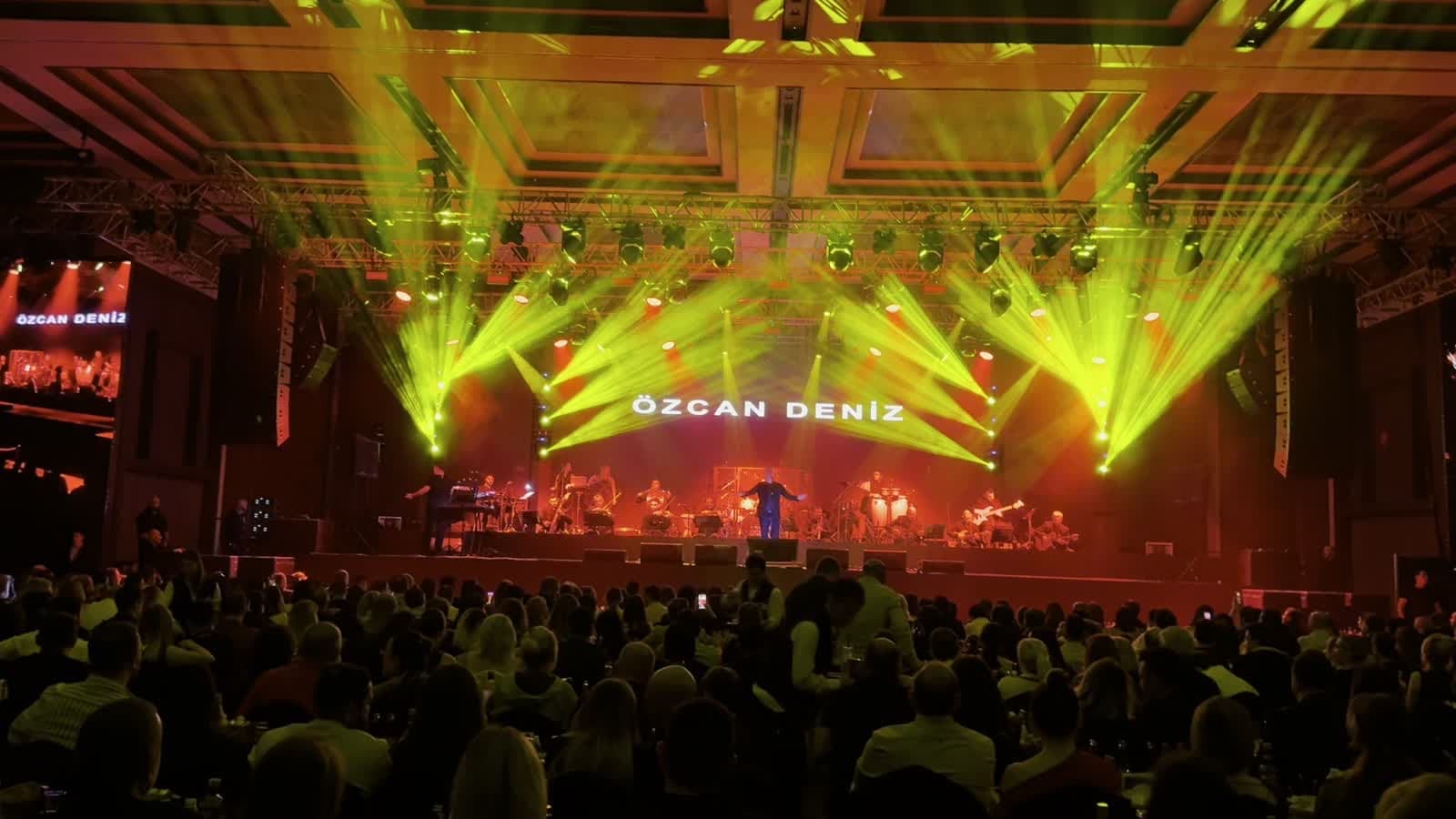
Audiences judge a concert first by its sound. Depending on depth and capacity, a typical design combines a line array main system, a subwoofer array, front fills along the stage lip and, for deep fields, delay towers. The front-of-house position sits in the audience, centred on the stage, usually behind its own barrier together with the lighting console. Our explainer on what a line array is covers how coverage is planned.
Lighting sets the atmosphere: moving heads, wash and beam fixtures, blinders, follow spots and haze are the usual building blocks. LED screens serve both as an upstage canvas and as side screens showing live camera feeds to the back of the crowd. Cameras, video direction and content should be planned alongside the lighting design, not after it. Explore our LED screen rental Turkey service for screen options.
Turkey runs on 230 V / 50 Hz single phase and 400 V three phase, which suits most touring equipment, but check transformer (and 60 Hz) requirements for any US-spec gear. Keep audio on a separate power feed from lighting and video, plan redundant generators for outdoor shows and route cables across audience areas with proper cable ramps.
Show day, step by step
On larger outdoor shows the stage and roof go up one or two days before, followed by sound, lighting and video. Show day then runs roughly like this:
- Morning: final technical checks, system tuning and backline placement.
- Afternoon: artist crew arrives, line check and sound check. If there is a support act, it sound checks last so the stage can be left set for it.
- Before doors: security briefing, emergency announcement test, barrier and exit checks.
- Doors: walk-in music and information or sponsor content on the screens.
- Show: stage manager, FOH, monitors, lighting and video coordinate over intercom.
- Egress and strike: once the audience has left safely, the load-out begins, often through the night.
Protect the sound check time written in the rider. Setting doors late enough for a relaxed sound check is the single decision that removes most show-day stress.
Safety and common mistakes
A front-of-stage barrier with a security pit, monitored crowd density, clear emergency routes and a medical point are the basics. On the technical side, roof and truss loads must be calculated, the wind limits set by the roof manufacturer and the structural calculations must be known to everyone in advance, and the chain of decision in bad weather written down. The most common mistakes are:
- Sharing the rider with the production team only after the contract is signed.
- Sizing the stage for the band alone and forgetting LED, PA wings and backline space.
- Pushing FOH to the very back or side of the field.
- Leaving build and strike days out of the venue hire period.
- Splitting stage, sound, lighting and video between uncoordinated vendors.
Our concert production Turkey service brings all of these elements together under one technical plan.
What to send for an accurate quote
Share the date, city and venue, indoor or outdoor, expected attendance, the artist's technical rider and any venue drawings. BernStage builds stage, roof, sound, lighting and LED as one production, dispatched from Istanbul to all 81 provinces of Turkey. Send your brief through our quote form and we will return a clearly itemised proposal.