Turkey hosts a long outdoor season, from spring city festivals in Istanbul to summer events on the Aegean and Mediterranean coasts. For promoters and agencies, festival production in Turkey offers great sites and a capable local supply chain, but it also brings multi-day weather exposure, generator-based power and venues that were never designed for crowds. This guide explains how a festival's technical backbone is planned, from site layout and stages to changeovers, power, weather and crew.
What festival production in Turkey covers
Festival production planning means designing the site, stages and technical systems as one plan that works for every artist and every day. In short, it covers:
- Site plan: stages, audience areas, FOH positions, backstage, food courts and emergency routes.
- Stages: main stage, second stage, DJ or tent stage, each with its own size, roof and load capacity.
- Sound, lighting and video: house systems shared by all artists, plus artist-specific additions.
- Changeovers: running order, changeover times and shared backline.
- Power: generators, distribution, redundancy and refuelling.
- Weather and safety: wind, rain and heat scenarios, overnight security and evacuation.
Problems start when one of these is decided in isolation. Move a stage ten metres and the FOH position, cable routes, generator location and audience flow all move with it.
Site planning: where the festival stage goes
Every technical decision sits on the site plan. When positioning the main stage, consider:
- Sound direction: aim the PA away from residential areas and towards open, empty land. Aiming out to sea is not a free pass: sound carries a long way over water, especially in the evening, and can reach homes on the far side of a bay. This directly affects noise complaints and any sound level limits.
- Sun: at sunset the audience should not stare into the sun, yet a stage facing straight into it loses LED visibility and bakes the crew. Balance this against the hours when the festival peaks.
- Ground and slope: a gentle slope works like a natural amphitheatre, while the stage itself needs flat ground of known bearing capacity.
- Access: trucks to the back of the stage, a backstage compound, artist vehicles and an ambulance route.
- Coastal wind: beach and clifftop sites on the Turkish coast commonly get an onshore sea breeze during the day, which should be factored into roof choice, ballast and LED wall sizing within the manufacturer's limits.
Multi-stage festivals
The biggest technical issue with several stages is sound bleed. Place stages back to back or facing different directions, keep distance between them and use natural barriers where possible. Then write the running order around it: a heavy headliner on the main stage should not clash with an acoustic set on the second stage.
Backstage and technical compounds
The areas the audience never sees shape the day as much as the stages do. Behind the main stage you need artist dressing rooms, prep tents for visiting crews, backline storage, a crew rest area, the production office and a generator park. Keep these away from vehicle traffic, give artists and crew a separate entrance from the public, and plan night lighting. A simple accreditation and wristband system keeps backstage secure and makes movement easier for everyone working there.
The festival stage: size, roof and changeovers
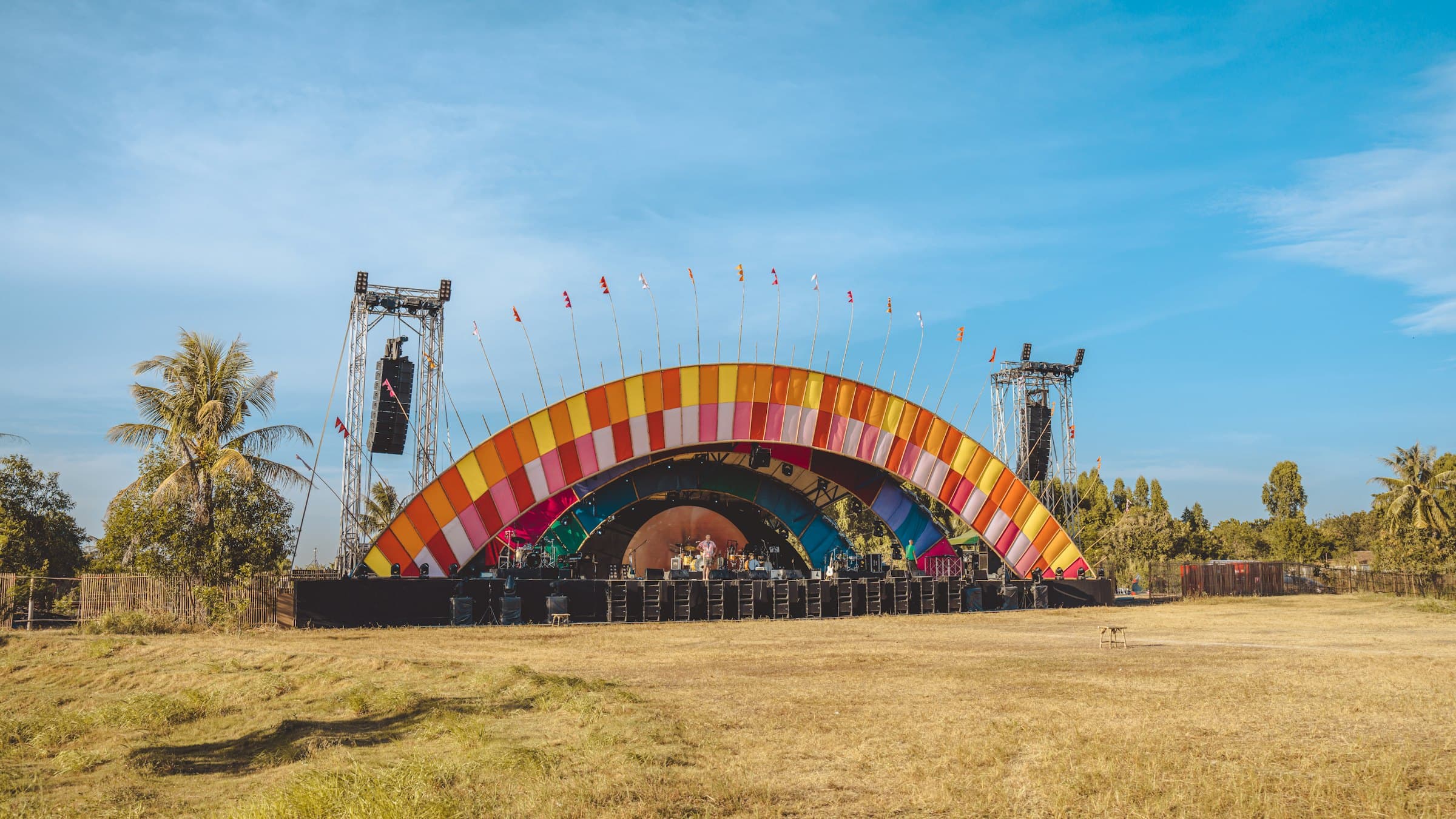
A festival main stage works harder than a single-show concert stage. It serves several line-ups a day, and the next act is being prepared while the current one plays. Look for:
- PA wings for flown line arrays and a roof rated for the full lighting and video load,
- generous wing and upstage space to park the next act's equipment,
- rolling risers so drum kits and keyboard setups can be built offstage and pushed into position,
- hanging points for upstage and side LED screens on the roof or on separate towers.
Our article on outdoor stage roof systems compares roof options, and our concert production Turkey page shows the systems we supply.
An example festival day
| Block | Timing | Technical note |
|---|---|---|
| Line check and sound check | Morning and afternoon | Reverse order, so the opener's setup stays on stage |
| Doors | Before the first act | Walk-in music and information content on screens |
| Opening act | Short set | House lighting and a fixed stage layout |
| Changeover | Per rider and layout | Rolling risers, fast line check |
| Middle acts | Medium sets | Guest engineers' show files loaded in advance |
| Headliner | Longest set | Special lighting, video content and effects |
Realistic changeover times are what finish a festival on schedule. Collect and merge every artist's rider weeks ahead; our guide what is a technical rider explains what to look for.
House sound, lighting and video
Rather than building a system per artist, festivals use a house rig shared by everyone. The house PA combines a main line array, a subwoofer array, front fills and, for deep fields, delay towers. House consoles are chosen from models that touring engineers widely accept, so visiting crews can load their own show files and start working immediately.
Lighting follows the same logic: a flexible house rig of moving heads, washes, beams and blinders that suits different genres, with headliners adding their own specials. On video, the upstage wall carries show content, side screens carry live camera feeds and changeovers carry sponsor and information slides. See our LED screen rental Turkey options.
With several stages, wireless microphones and in-ear monitors need a shared frequency plan that stays within the bands permitted for that use, since stages, broadcast crews and security radios all share the same RF environment and can interfere with each other. Logging sound levels at FOH is good practice for both local compliance and audience health.
Power, weather and overnight planning
Most festival sites have little or no permanent power, so the plan is built on generators:
- Separate sources, or at least separate distribution, for audio, lighting and video, and catering and vendors.
- Redundant generators on the main stage with a clear changeover procedure.
- Refuelling scheduled outside show hours on multi-day events.
- Cable ramps across audience areas and verified earthing.
- Site lighting planned for safe egress after the last act.
On multi-day festivals the stages and systems stay up overnight. Measure wind at the stage, agree thresholds for the roof and LED walls based on the manufacturer's data and the structural calculations, and write down what happens at each threshold. Protect FOH and monitor positions from rain and re-check rigging and power every morning. In high summer, heat is its own risk: shade equipment tents and FOH, and plan water and rest areas for the crew. Our outdoor event technical checklist goes into detail.
Crew structure and communication
A festival runs on clear roles:
- Production manager: owns the technical scope and budget.
- Site manager: runs layout, logistics, power and infrastructure.
- Stage manager: runs each stage's schedule, changeovers and stage safety.
- Artist liaison: collects riders and manages arrival and sound check times.
- Sound, lighting, video, rigging and power teams: working shift plans per stage.
Dedicated radio channels per department, intercom on each stage and an on-site production office keep communication simple. Agreeing a common working language with visiting engineers, and making sure each stage has crew chiefs who can use it, removes a lot of friction on show day. Our event production Turkey service covers the full technical scope.
To start planning, send your dates, site, expected attendance, number of stages and line-up through our quote form. BernStage delivers stages, sound, lighting, LED and power as one festival plan anywhere in Turkey.