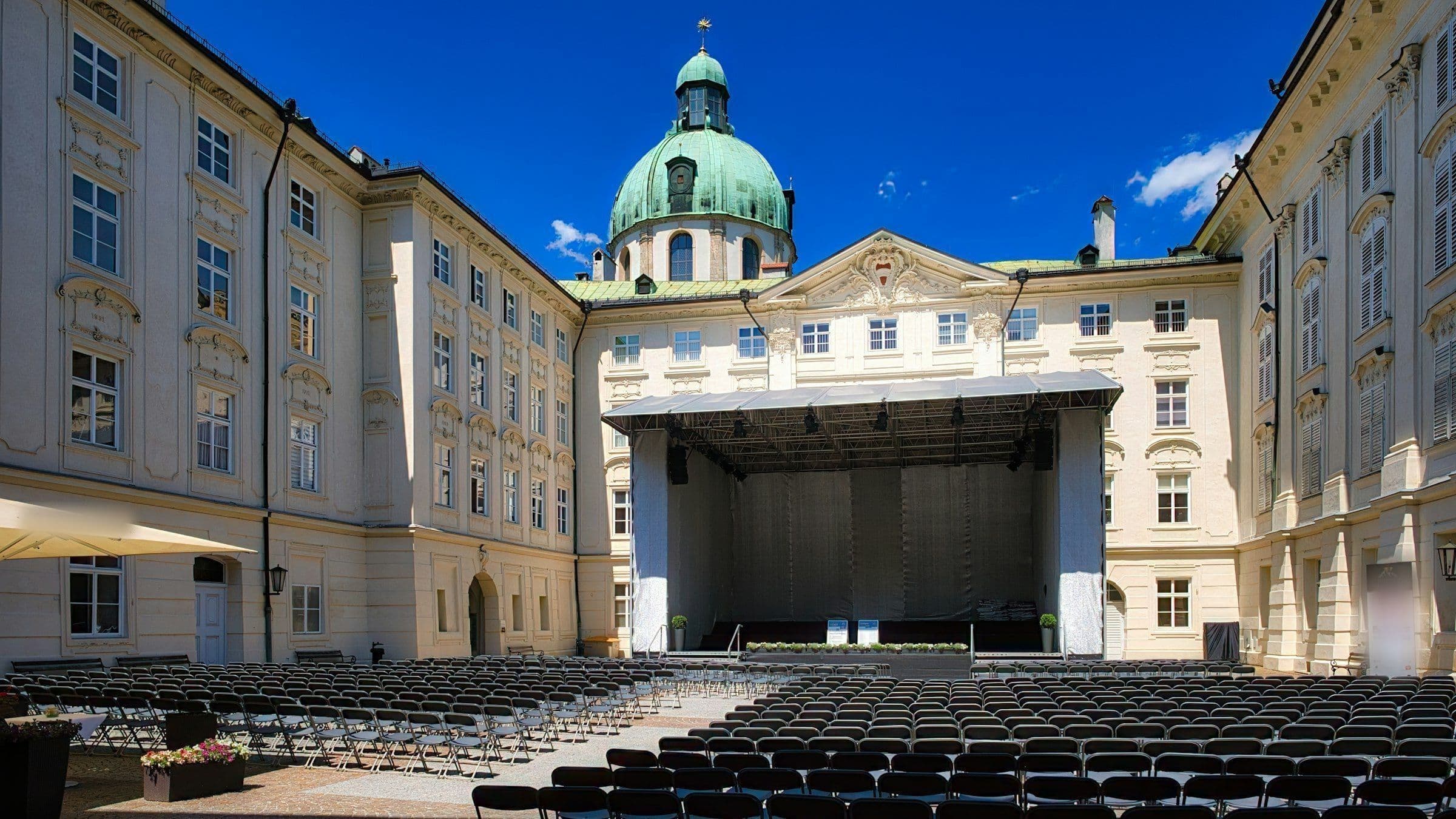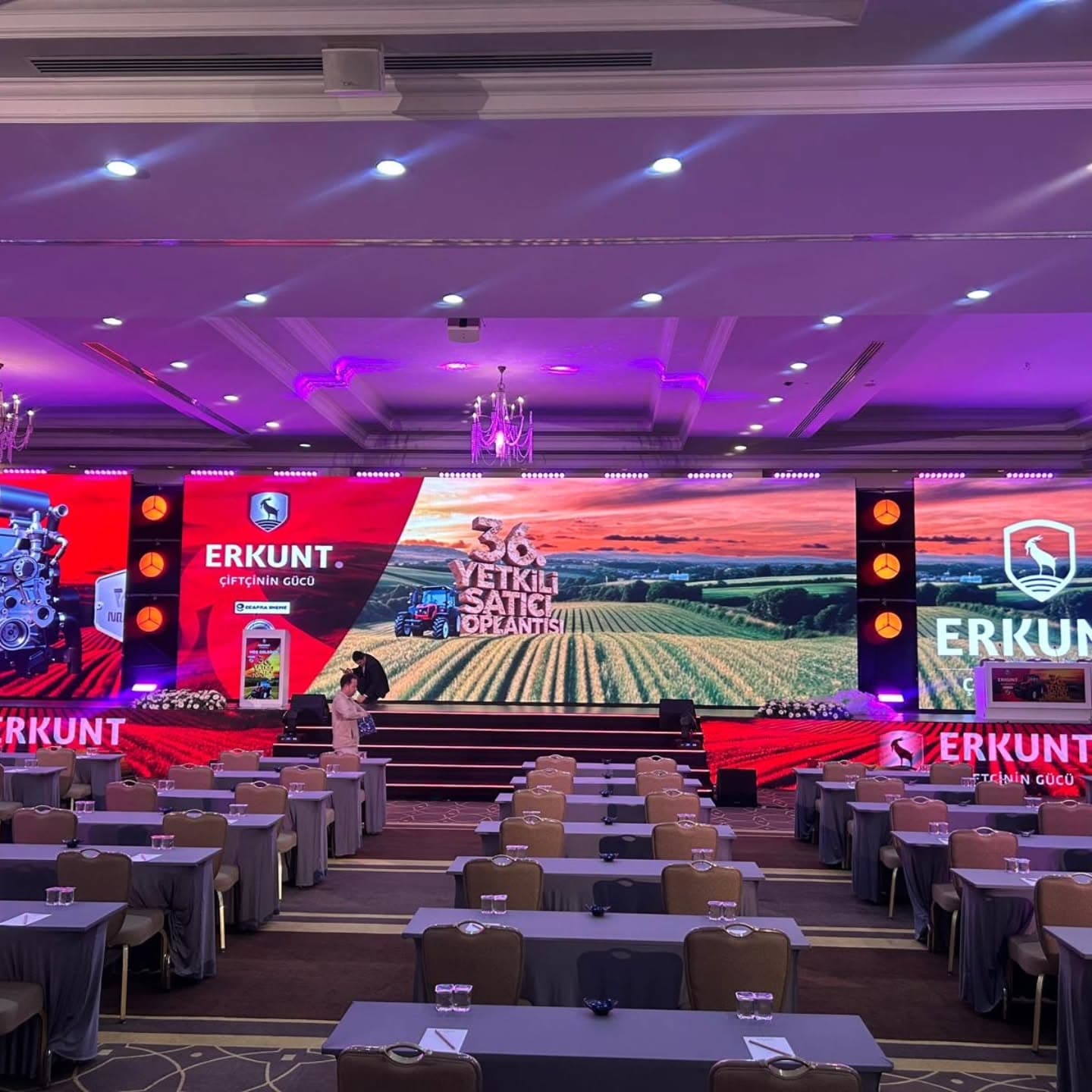
Rally stage hire in Turkey is one of the most demanding outdoor builds there is: a single speaker has to reach a large standing crowd clearly and without interruption, often on uneven ground, and usually with far less build time than a concert. This guide is strictly technical and content-neutral. It is written for campaign teams, unions, NGOs, civic organisers and international agencies running large public gatherings, and covers stage size and height, PA design, outdoor LED screens, power redundancy and safety.
What a rally production includes
- Stage: high enough to be seen over a standing crowd, with a backdrop and, if needed, a roof.
- Lectern: dual microphones, sometimes on a thrust extending towards the crowd.
- PA: a long-throw main system plus delay lines for deep audience areas.
- LED screens: beside the stage and, on large sites, within the crowd, showing close-ups.
- Cameras and video switching to feed the screens.
- Power: redundant generators and UPS for critical equipment.
- Safety and access: front-of-stage barrier, controlled backstage entry, green room and VIP area.
Rally stage hire in Turkey: size and height
On a concert stage, space for musicians comes first; on a rally stage, visibility does. Stages are usually higher than for concerts so the speaker can be seen over a dense standing crowd, while screens take care of the back. The figures below are approximate starting points; final dimensions come from the site survey and programme.
| Site | Stage | Height | PA | LED |
|---|---|---|---|---|
| Small square | Mobile stage or 8x6 m | 1.2–1.5 m | Point source or compact line array | One side screen |
| Mid-size square | 10x8 m – 12x8 m | 1.8–2 m | Line array + one delay line | Screens on both sides |
| Large open site | 14x10 m and above | 2–2.5 m | Line array + several delay lines | Side screens + screens in the crowd |
A large solid backdrop behaves like a sail in the wind. Mesh prints let some wind through and reduce, but do not remove, the load; ballast and wind limits for the backdrop structure should come from the manufacturer's data or a structural calculation. Restrict stage access to controlled rear stairs and add a ramp for step-free access. Plan a covered backstage area for speakers and staff, with its own controlled entrance away from the crowd. Trailer-mounted mobile stages open in a few hours and suit short-notice events, but have fixed dimensions and limited load capacity; modular stages are sized to the site and carry heavier PA and LED, at the cost of a longer build. See our stage rental Turkey page for both.
PA design for large crowds
The goal is that the last row understands every word. Crowd noise from applause and chanting raises the ambient level, so the system needs real headroom above it.
- Line array main system for controlled long-throw coverage; our explainer what is a line array explains why.
- Time-aligned delay towers at set distances, otherwise speech sounds echoey and blurred.
- Feedback control: the speaker often stands in front of the main hangs, so directional lectern microphones, careful placement and EQ matter; keep the speaker's monitor low.
- Microphone redundancy: two lectern microphones plus a wireless handheld and spare.
- Press feed box: a multi-output distribution box near the stage gives broadcasters a clean speech feed and greatly reduces the cluster of media microphones on the lectern.
With many broadcast crews on site, the radio spectrum gets crowded, so prepare a frequency plan in advance using only permitted frequencies and confirm it with an on-site scan on build day; our wireless microphone rental guide explains how.
Outdoor LED screens for rallies
For daytime events, sunlight is the main enemy: use high-brightness outdoor panels and plan screen orientation against the sun's position. Viewing distances are long, so coarser pixel pitches usually work outdoors. Two points are often missed. First, a viewer far from the stage sees the screen almost instantly while sound from the stage arrives late (roughly 0.3 seconds per 100 m). Delay speakers near remote screens keep speech clear there, and the system engineer balances their delay times against the main system and the video latency to keep lip-sync mismatch small. Second, ground-supported truss and truck-mounted LED structures both need wind limits and ballast taken from the manufacturer's data or a structural calculation. See our LED screen rental Turkey options.
A fast, safe build schedule
Rallies are sometimes confirmed only days in advance, so the site survey has to capture everything at once: slope and ground type (asphalt or soil), obstacles such as trees, poles and overhead lines, access routes suitable for trucks and cranes, and the nearest safe power point. A typical sequence:
- Site survey: dimensions, ground, vehicle access, power points.
- Stage and structures, ideally overnight or early morning while the site is empty.
- PA, LED and camera installation.
- Sound check, delay alignment and camera tests finished before the crowd arrives.
- Crew on site throughout the event.
- Load-out only after the crowd has dispersed; no vehicles enter before then.
Power, redundancy and safety
At a rally, losing sound means the event stops. Run two generators with automatic transfer, separate feeds for audio and LED, and UPS on the console, wireless receivers and video switcher. Barrier the stage front with a clear pit, fence in delay towers and screens within the crowd, keep cable runs away from dense areas and ramp every crossing, and name the person who calls wind holds against the manufacturer's or engineer's limits. Site permits, the security plan and official applications are the organiser's responsibility; we provide the layout, power and load data they require.
BernStage dispatches rally stages, PA and LED from Istanbul to all 81 provinces; see stage rental across Turkey's 81 provinces for logistics. Send your date, site and expected attendance through our quote form and we will plan the stage, sound and screens as one technical production.