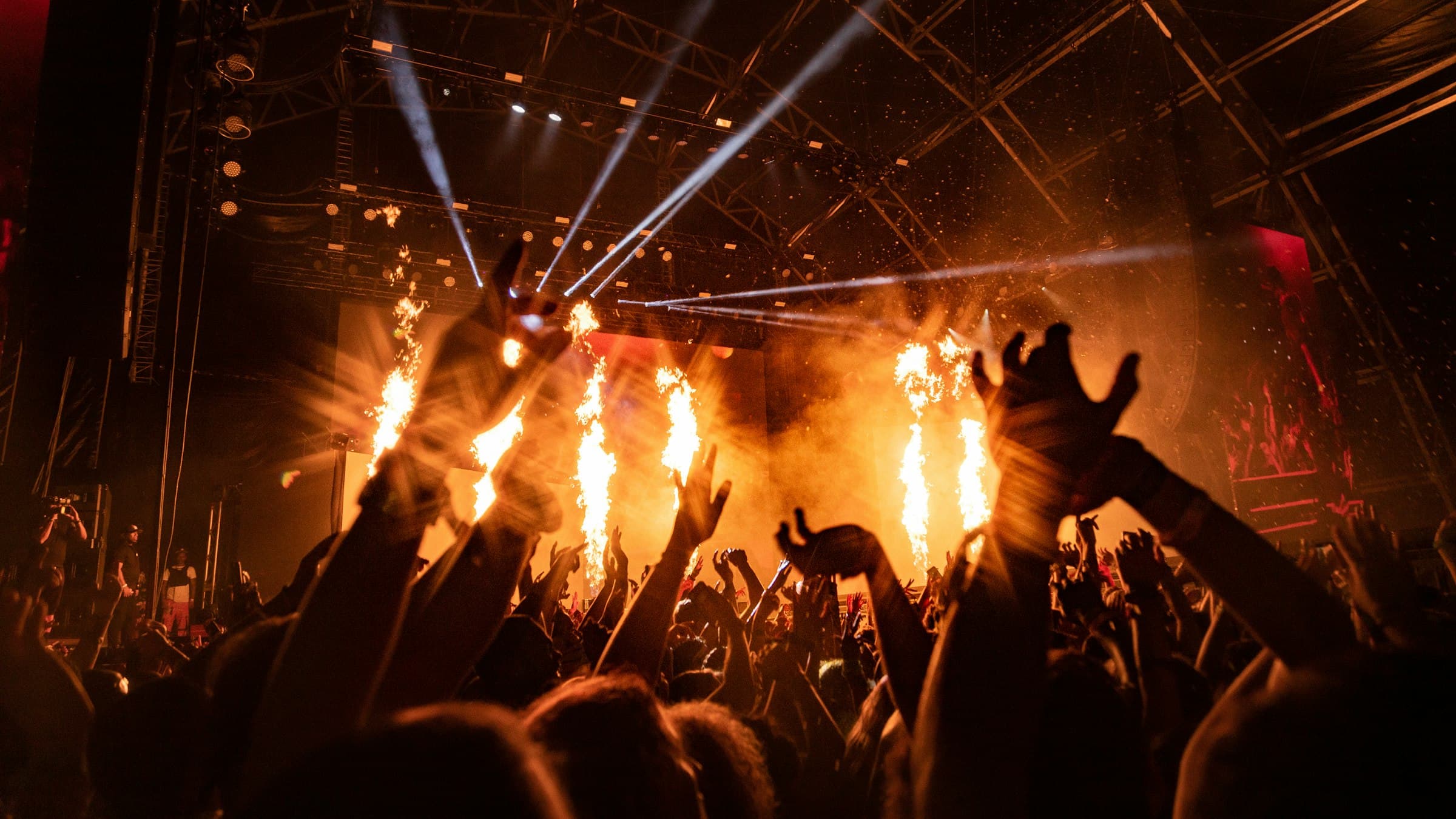
Stage special effects turn the big moments of an event into the ones people film: a confetti blast on the last chorus, low fog rolling across a dance floor, a wall of cold sparks as a product is revealed, or a laser show locked to the music. For international planners producing events in Turkey, effects are also the area where venue rules, fire safety and on-site coordination matter most. This guide covers the most common effects, where each one works best and the safety measures a professional crew will insist on.
Common stage special effects at a glance
- Confetti and streamers: fan-driven machines for a gentle fall, or CO₂ and compressed-air cannons for a single dramatic burst.
- Haze and smoke: haze makes light beams visible; smoke creates dense, short-lived clouds.
- Low fog: chilled fog that hugs the floor for a "dancing on clouds" look.
- CO₂ jets: short, tall white columns, a staple of concerts and club shows.
- Cold sparks: spark fountains created without pyrotechnic powder.
- Lasers: beams, tunnels and graphics programmed to music.
- Others: foam, snow machines, balloon drops and flame effects.
Each effect needs specific equipment, a trained operator and its own risk assessment. Effects are rarely a standalone order; they are part of the wider show alongside sound, lighting and video in a full event production in Turkey.
Confetti: the finale effect
Confetti is the go-to effect for concert finales, award announcements and product reveals. Before you plan it, check four things:
- Venue permission: some hotels, congress centres and heritage sites ban confetti or charge cleaning fees. Ask during contract negotiations, not on show day.
- Material: indoors, use flame-retardant paper confetti. Outdoors and in natural settings, choose water-soluble or easy-to-collect materials.
- Wind: outdoors, wind direction decides whether confetti lands on the audience or in the mixing desk.
- Cleaning: agree who cleans up and how long it will take before the venue turns over.
Haze, smoke and low fog
Haze creates a fine, even atmosphere that guests barely notice but which makes beams and lasers visible; it is a large part of why moving head lighting looks so sharp on camera. Smoke machines produce dense clouds for a visual curtain or a dramatic entrance. Our article on event lighting design basics explains how atmosphere and lighting work together.
Low fog is cooled so that it stays at floor level, ideal for first dances, gala openings and theatrical moments. Dry ice systems give a very dense, white look, while chiller-based machines are more controllable and repeatable. Where dry ice is used, transport, storage, handling with protective gloves only (bare-skin contact can cause cold burns) and the risk of carbon dioxide building up in poorly ventilated spaces must all be planned.
Smoke, haze and fire detection
The most common indoor problem is haze or smoke setting off optical smoke detectors, which can mean a fire alarm, an evacuation announcement and a fire brigade call in the middle of your event. A professional approach looks like this:
- Notify the venue in writing in advance that haze or smoke will be used.
- The venue's fire safety officer assesses detector types and the zones affected.
- Any temporary change to detection is carried out only by authorised venue staff. The production crew never touches the fire system.
- If detection is adjusted, the venue's fire watch procedure applies and the system is restored after the show.
- Haze density is kept low and balanced with ventilation.
CO₂ jets and cold sparks
CO₂ jets release liquid carbon dioxide through a valve to create a white column several metres high. They are spectacular on a beat drop, but CO₂ is heavier than air and can accumulate at low points in enclosed, poorly ventilated spaces. Indoors, the number and length of bursts are limited, ventilation is assessed and cylinders are secured in a safe area.
Cold spark machines heat a special granule and eject it as a fountain of sparks. Because there is no pyrotechnic powder, they are far more controllable than fireworks and are widely used at weddings, galas and concerts in Turkey. Still, "cold" is a misleading name: the sparks are hot particles. The core rules are:
- Position machines according to the minimum safety distances in the manufacturer's manual, leaving clear space to the audience, performers and set.
- Keep flammable materials away: drapes, fabric set pieces, balloons, paper decorations and floral arrangements.
- Secure the units to the floor, protect cables and make sure they cannot tip over.
- Rehearse the performers' or couple's movement; long dresses, veils and hair are real risks.
- Keep each machine in an operator's line of sight with a remote stop, and a suitable fire extinguisher nearby.
For effects at destination weddings, see our guide to wedding sound and lighting in Turkey.
Laser shows: impressive, but they demand discipline
A well-programmed laser show creates tunnels, waves and graphics in time with the music. High-power beams can, however, cause serious eye injury, so professional practice includes:
- Beams kept well above head height, with no direct scanning of the audience.
- Projectors mounted on rigid points so vibration cannot shift beam positions.
- A trained operator running the show with an emergency stop always within reach.
- Checks for reflections from mirrors, glass facades and glossy surfaces.
- For outdoor lasers aimed at the sky, considering early whether coordination with aviation authorities may be needed.
Laser beams generally need haze to be clearly visible in the air, which brings the smoke detector question back, so lasers and atmosphere are always planned together.
Safety and permission checklist
| Effect | Main risk | Key control |
|---|---|---|
| Confetti | Venue rules, slipping, cleaning | Venue approval, flame-retardant material, cleaning plan |
| Haze / smoke | Fire alarm activation, visibility | Coordination with the venue's fire safety officer |
| Low fog | Slippery floors, CO₂ build-up with dry ice | Ventilation, limited duration, floor checks |
| CO₂ jets | CO₂ accumulation indoors, cylinder safety | Limited use, secured cylinders, ventilation |
| Cold sparks | Contact with flammable materials | Manufacturer distances, clear zone, extinguisher |
| Lasers | Eye injury, reflections | Beams above audience, trained operator, e-stop |
Beyond the table, a few rules apply to every effect: written approval from the venue; an effects list and placement plan shared before load-in; every effect tested at least once in rehearsal under real conditions; and one named person who can stop all effects in an emergency. Flame effects and pyrotechnics are a separate specialism and should only be used by appropriately authorised teams once the required permits are in place.
Timing makes the effect
An effect lands only if it hits the moment. Confetti half a second after the chorus or a CO₂ jet that misses the drop reads as a mistake. Effects are therefore triggered from the lighting console via DMX or locked to music and video with timecode, and on live shows the effects operator takes cues on the same intercom as the stage manager and lighting operator. For artist shows with big effect moments, our concert production Turkey team builds the effects into the cue list from the start.
BernStage integrates stage effects with sound, lighting and LED in one show plan and clears venue permissions and safety positions before load-in. Tell us about your venue and running order through our quote form and we will advise which effects are feasible for your event.