If you are planning an event abroad, stage rental in Turkey is often the first line in the technical budget and the hardest one to estimate from a distance. Two stages with identical dimensions can be priced very differently depending on the city, the date, the roof system and the crew required. This guide breaks down what actually sits inside a stage quote, so you can compare offers fairly and spend where it matters, whether your event is in Istanbul, Antalya or a resort in Belek.
What a stage quote actually includes
A professional stage quote is rarely just a platform. A typical offer combines several cost blocks:
- Deck size and height: more square metres means more modules, legs, stairs, handrails and skirting. A 1 m corporate riser and a 1.8 m concert deck use different support systems.
- Roof or ground support: for outdoor shows, the roof is usually the largest single item. Span, clearance and load capacity determine the price.
- Truss and rigging: indoors you may need ground-supported towers or ceiling rigging points with chain hoists, each requiring certified riggers.
- Crew: load-in, show-call and load-out labour, plus overtime for night work.
- Transport and logistics: number of trucks, distance from the warehouse, venue access, forklifts or cranes.
- Duration: build day, rehearsal day, show day and strike day are each planned and costed.
Size, height and roof: the backbone of the budget
Size the stage around everything that has to live on it, not only the performers. Backline, risers, set pieces, an upstage LED wall and lighting positions all take space. A product launch might work on an 8 x 4 m deck, while a full band with dancers usually needs 12 x 10 m or more.
For roofs, the deciding factor is load. If the PA, moving lights and video wall are flown from the roof, the structure has to be specified for that weight and assessed against expected wind conditions. A bigger, taller roof means more components, a larger crew and a longer build. You can see the systems we provide on our stage rental Turkey page.
Indoor venues: truss instead of a roof
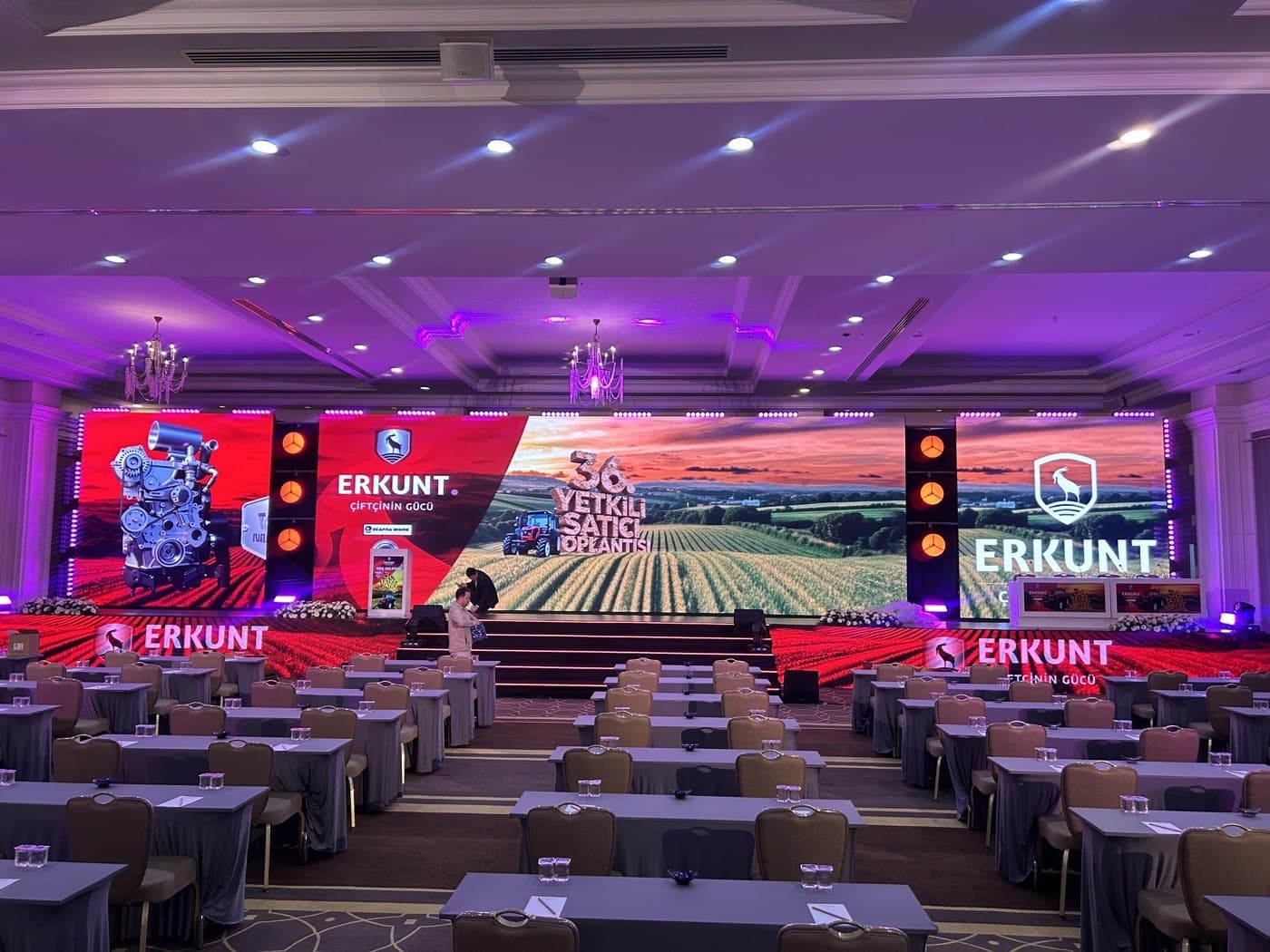
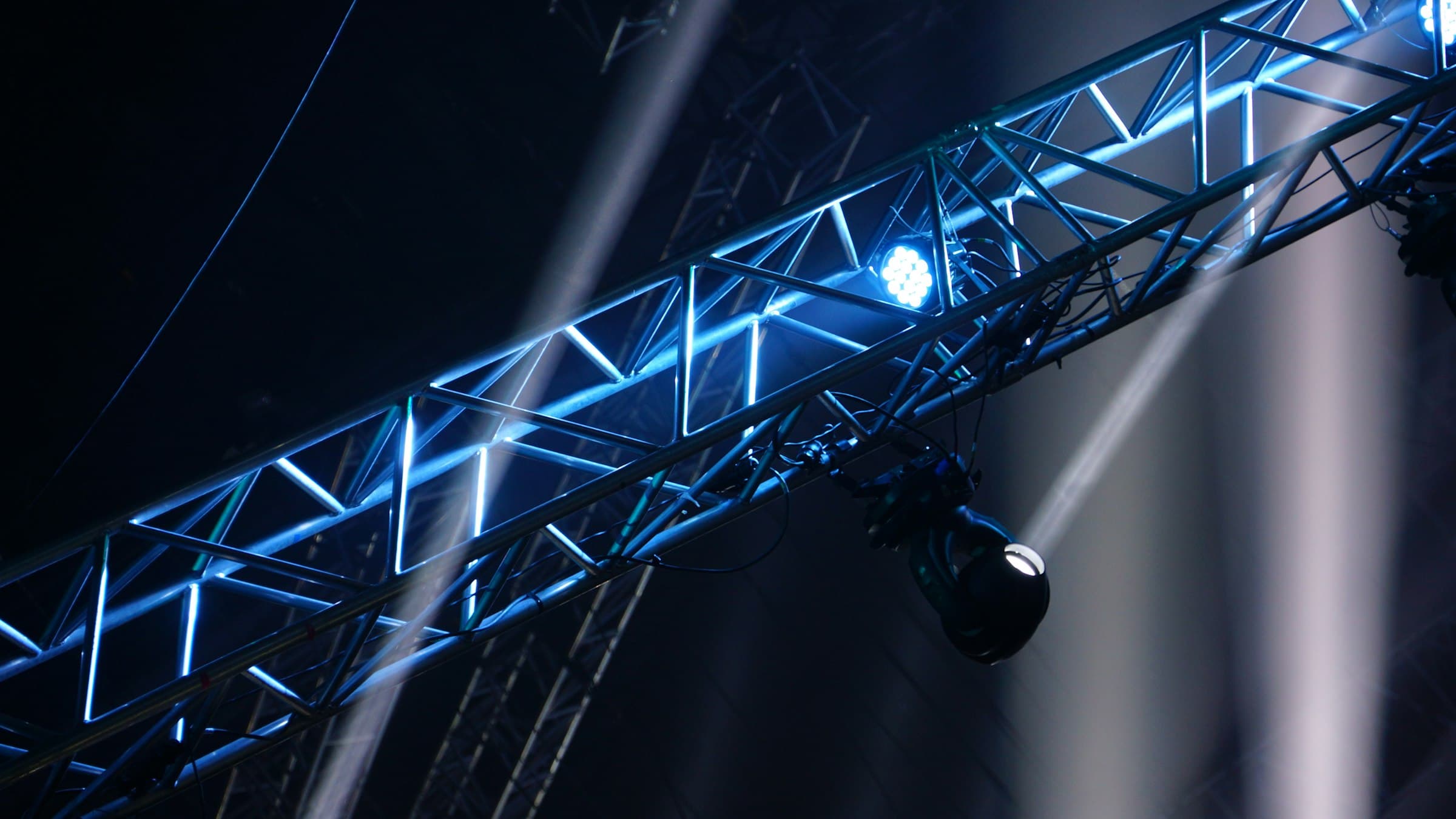
Hotel ballrooms, congress centres and arenas rarely need a roof stage. Instead, ground-supported truss towers or motorised truss lines hung from approved ceiling points carry the lighting and video. This is often quicker to build and lighter on transport, but the ceiling load rating, the venue's technical specification and hotel approvals must be checked first. Low ceilings also affect where LED walls and fixtures can go, so share venue drawings as early as possible.
Crew, schedule and overtime
Labour is the item international planners most often underestimate. A large roof stage can take a full day or more to build, and the strike frequently happens straight after the show, late at night. Compressed schedules, such as building, performing and striking on the same day, push labour costs up quickly.
The easiest saving is time. Secure early venue access, spread the build over daylight hours and fix your rehearsal window in advance. A calmer schedule is also a safer one.
Also look at who stays on site. A stage manager and technicians on call during the show mean fast reaction if something unexpected happens. This may appear as a separate line in the quote, but removing it to save money is a real risk at busy outdoor events. Ballast, ground assessment and wind monitoring belong in the same category: essential, not optional.
City, venue access and seasonality
Distance from the supplier's warehouse drives trucking, travel and accommodation. An Istanbul-based crew working in Istanbul has a very different logistics plan from one delivering to Antalya, Bodrum or Cappadocia. In Antalya and Belek, resort hotels have their own loading-dock rules, lift limits and quiet hours, all of which affect how long a build takes.
Season matters too. Summer is peak time for festivals, weddings and hotel events on the Turkish Riviera, so weekend dates and large roof systems are booked early. Shoulder-season or mid-week dates usually offer more flexibility.
A realistic view on price ranges
Flat per-square-metre prices you may find online are rarely meaningful. The real number depends on the roof, the build and strike days, the crew and the logistics, and it varies from project to project. The table below shows the relative weight of each item rather than fixed figures:
| Cost item | Impact on budget | How to keep it under control |
|---|---|---|
| Roof system | High | Indoors, consider ground-supported truss instead |
| Deck size | Medium to high | Size to real usage, not to a template |
| Crew and overtime | Medium to high | Daylight builds and early venue access |
| Transport | Medium | Source stage, sound, lighting and LED from one supplier |
| Stairs, handrails, skirting | Low | Never cut these for safety reasons |
A reliable figure can only be given once the venue, date and technical requirements are known.
Comparing quotes from Turkish suppliers
When two quotes look far apart, the difference is usually scope. Check the following before deciding:
- Are load-in, load-out and transport included?
- Does the offer state roof load capacity and wind limits?
- Will technicians stay on site during the show?
- Are stairs, handrails, ramps and skirting included?
- Is the stage coordinated with sound, lighting and video under one plan?
Splitting stage, audio and lighting between several vendors in a foreign country often means duplicate trucking and more coordination risk. Our event production Turkey service brings these together. For the audio side, read our guide to choosing an event sound system.
Information that gets you an accurate quote
To receive a fast and realistic offer, share the date, city and venue, whether the event is indoors or outdoors, expected attendance, event type and any artist technical riders. BernStage delivers stage, sound, lighting and LED as a single production across Istanbul, Antalya and beyond. Send us your brief and we will return a clearly itemised proposal. Get a quote today.