Truss and rigging safety is the part of an event the audience never sees, yet everyone's safety depends on it. Line arrays, moving lights and LED walls are routinely flown above people's heads. If the truss, hoists, chains and fittings carrying those loads are miscalculated or poorly installed, the consequences can be serious. For international organisers planning shows in Istanbul, Antalya or a Belek resort, this guide explains how load calculations work, what chain hoists do, why inspections matter, who is responsible for what and how wind affects outdoor roof systems.
What are truss and rigging?
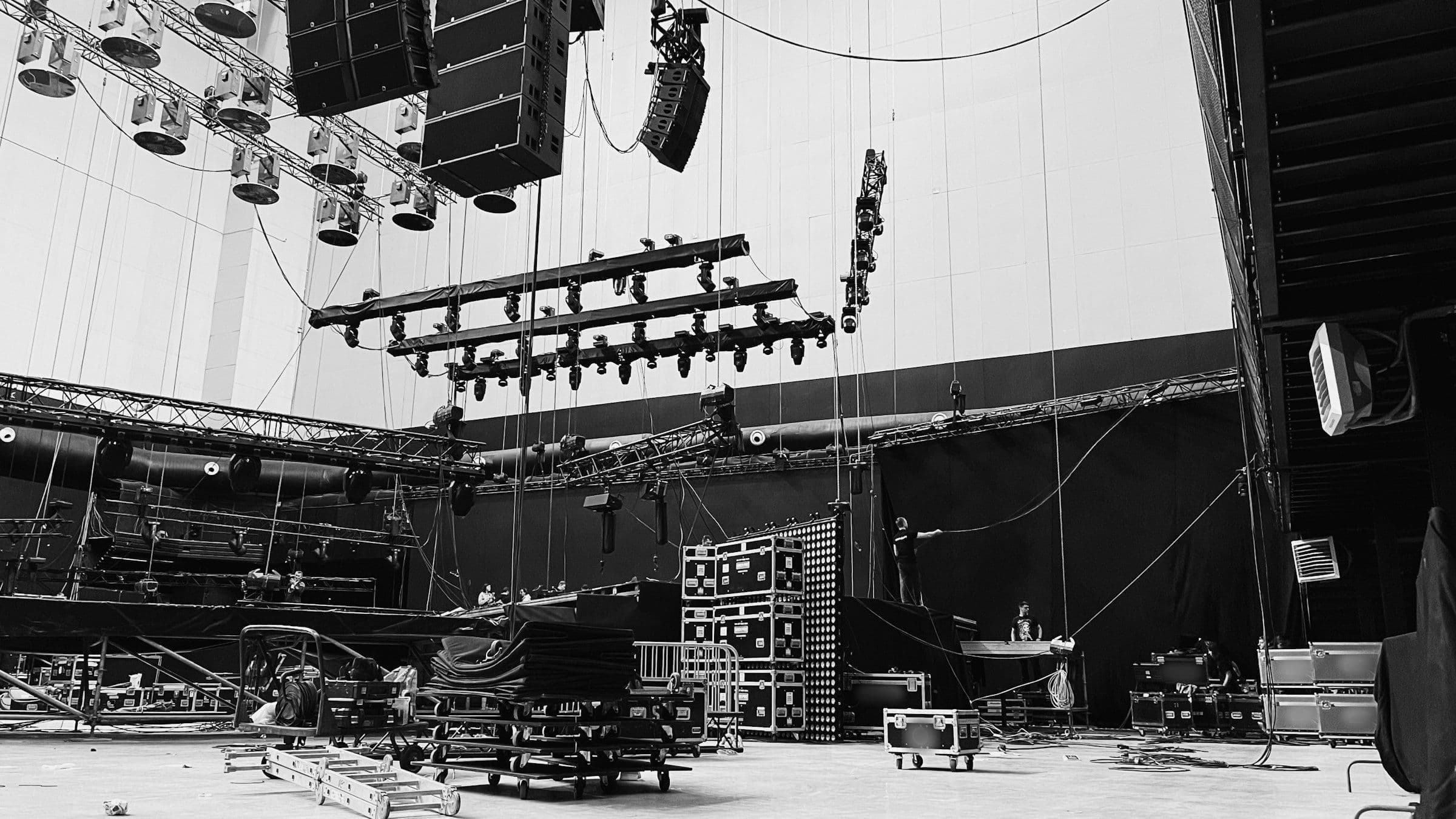
Truss is a lattice beam, usually aluminium, available in box and triangular profiles. Sections are joined to build stage roofs, towers and screen frames. Rigging is everything involved in hanging, lifting and securing those structures and the equipment on them: ceiling points, hoists, chains, slings, shackles, pins and safety steels.
Indoors, truss is usually lifted with hoists from the venue's approved rigging points. Where that is not possible, ground-support tower systems carry the load. Outdoors, roof stages or freestanding towers are used.
The right method depends on the building, the weight of the rig, the build time and the visual design. In a historic venue or a hall whose ceiling is not rated for loads, a ground-support system that puts no weight on the roof structure may be the only safe choice.
Load calculations come first
Every truss model has a manufacturer load table showing what it can carry over a given span under different loading conditions:
- Uniformly distributed load: weight spread evenly along the truss, such as fixtures at regular intervals.
- Point loads: weight concentrated at one or a few points, such as a single PA hang.
- Deflection: how much the truss bends under load, which must stay within acceptable limits.
A proper rigging plan adds up every fixture, cable, fitting and the truss itself, then checks that total against the capacity of the truss, the hoists and the venue's rigging points. That point-by-point calculation is the paper guarantee behind every flown system.
Why late changes are risky
Every item added after the rigging plan is drawn changes the numbers. "Two more LED panels" or "a few extra lights on the truss" the day before the show may look minor, yet they can push hoists or venue points past their limits. Moving a load along the truss also changes how weight is shared between hoists, even if the total stays the same. Every change should be approved by the head rigger and the plan updated.
| Component | What to check |
|---|---|
| Truss | Load table for the span, loading type, undamaged connectors |
| Chain hoist | Working load limit, class, periodic inspection record |
| Venue rigging point | Approved capacity and position from the venue |
| Slings, shackles, steels | Marked working load limit and condition |
| Flown equipment | Real weight including cables and accessories |
Chain hoists and secondary safety
In live production, loads are lifted with electric chain hoists. Hoists are chosen by working load limit, for example 500 kg or 1 tonne, and run from a controller individually or in groups. For loads suspended over audiences, hoists built for that purpose, with features such as double brakes, are preferred.
Professional practice adds secondary safety to everything in the air: safety cables on fixtures and steel slings alongside the hoists on truss. A hoist chain should never be the only thing holding a load once it is in position.
The hoist controller is part of the safety system too. Running all hoists at the same speed keeps the truss evenly loaded during lifts. Throughout lifting and lowering, the operator must be able to see the load, the area beneath must be clear and the crew needs a clear communication routine.
Inspection, certification and competent crew
Rigging gear is only as safe as its maintenance. Ongoing checks are essential:
- Inspect truss sections visually before every use for cracks, dents and weld damage.
- Have hoists, chains and lifting accessories inspected periodically by competent persons and keep records.
- Remove damaged or unmarked fittings from service.
- Use trained, experienced riggers, and keep everyone out from under loads while they are being lifted.
As an organiser, it is entirely reasonable to ask your supplier for inspection records and the rigging plan.
Inspection does not stop once the rig is up. On multi-day events, especially outdoors, connection points and ballast should be checked daily, and the whole system should be reviewed after storms or heavy rain.
Who is responsible for what?
Rigging safety is shared:
- Venue: provides rigging point locations, capacities and house rules. Hotel ballrooms usually include this in their technical specification.
- Production company: calculates loads, supplies suitable equipment and competent crew, and carries out build and strike safely.
- Organiser: provides a realistic build schedule, passes on venue information and permits in time, and flags late changes that add weight to the rig.
Wind and outdoor roof systems
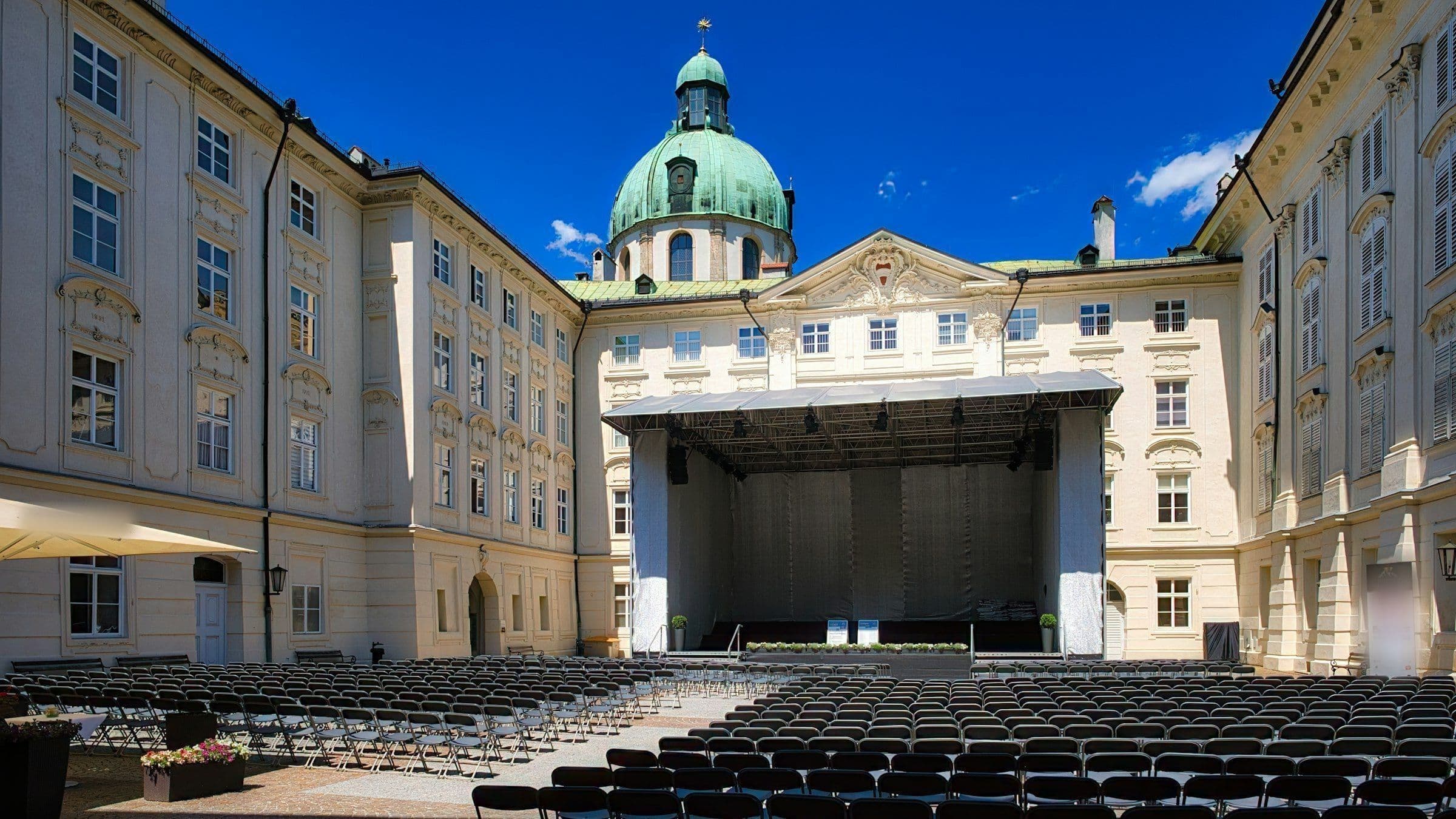
Outdoors, roof stages and flown LED walls are exposed to wind loads. When the back and sides of the stage are covered with scrim or banners, the surface catching the wind grows. Roof systems are therefore secured with ballast and anchoring according to the manufacturer's wind limits, wind is monitored during the event, and pre-agreed steps follow if limits are reached: opening or removing scrims, lowering the LED wall and, if necessary, stopping the show. Our outdoor event technical checklist covers this in more detail.
Plan a safe production
BernStage plans and installs truss, rigging and roof systems with proper load calculations for concerts, festivals and corporate events across Turkey. Explore our stage rental Turkey and concert production Turkey pages, then share your venue details and technical needs. We will return a safe, workable plan. Get a quote.