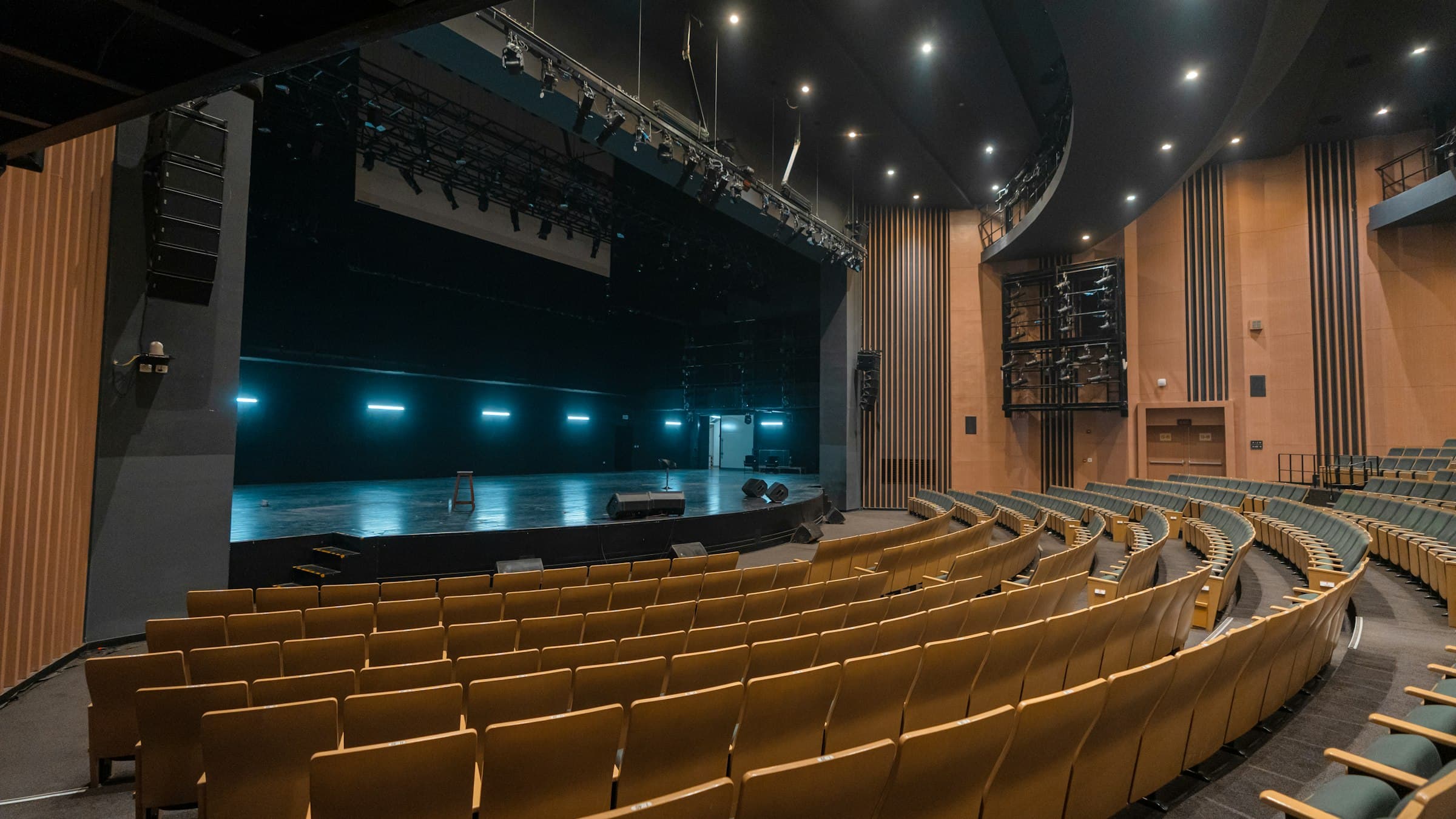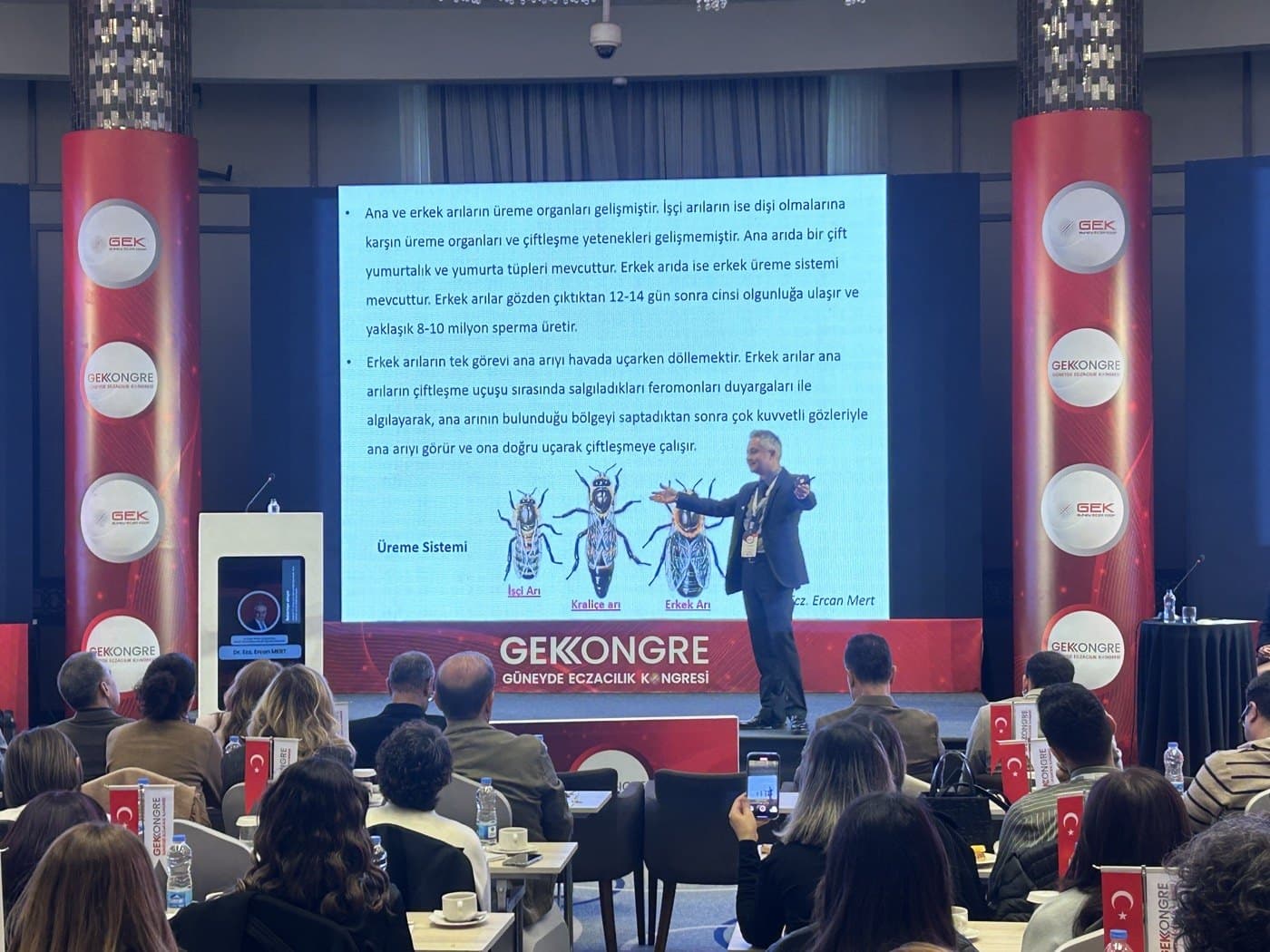
The LED wall vs projector decision is less about the technology than about the room: how much light is in it, how high the ceiling is, how far the audience sits from the screen and whether the event is being filmed. Projection is still a sensible, economical choice in a darkened meeting room. In a daylight venue, a ballroom full of stage lighting or an outdoor site in daylight, an LED wall is usually the only realistic option. If you are planning a conference, gala or launch in Turkey, often in a hotel or congress centre you have only seen in photos, this guide gives you a practical way to decide.
LED wall or projector: the short answer
Projection is enough when the room can be fully darkened, there is enough ceiling height and throw distance, the stage will not be heavily lit and nothing is being filmed. If any one of those conditions fails, an LED wall is the safer choice.
- Choose projection for small and mid-size rooms that can be blacked out, training sessions and workshops, breakout rooms and tight-budget, slide-led meetings.
- Choose LED for daylight venues, outdoor events, galas and concerts with stage lighting, filmed or streamed events, and launches that need a custom screen shape.
- Combine both with LED in the plenary room and projection or large displays in breakouts.
Ambient light decides most cases
A projector makes an image by bouncing light off a screen. Any other light that lands on that screen, from windows, house lights or stage fixtures, lifts the blacks to grey and kills contrast. Even with a bright projector, a lit room makes the picture look noticeably washed out.
An LED wall emits its own light. Indoor panels are comfortably readable in ballrooms and congress halls, and outdoor panels are built to stay legible in daylight. That matters most in three situations:
- Daylight venues: glass-fronted foyers, terraces, garden events and daytime launches, for example on a resort terrace.
- Heavy stage lighting: at a gala with moving heads and key light, spill onto a projection screen is unavoidable.
- Rooms that cannot go dark: at dinners the tables must stay lit, because guests will not eat in the dark.
If you cannot darken the room during the event, the money saved with projection is paid back in a poor picture.
Ceiling height, throw distance and placement
Projection also needs physical space. Front projection puts the projector in front of the screen, so presenters who step into the beam get light in their eyes and cast shadows on their slides. Rear projection solves that but needs clear depth behind the screen equal to the throw distance, space that in most hotel ballrooms comes out of the stage or the seating plan. Short-throw lenses reduce the depth needed, but not for every room or screen size.
For very wide images, several projectors are blended together with edge blending. It can look superb, but it requires careful alignment, calibration time and projectors that do not move.
An LED wall stands on a ground-supported frame or hangs from truss behind the stage. There is no throw distance and no shadow. In return, weight, power and structure must be planned. Low ceilings limit screen height, so a wider, lower wall or a pair of side screens is often the answer. For sizing, see our guide to LED pixel pitch and viewing distance.
Image quality on camera and stream
If the event is recorded, streamed or filmed for social media, the decision becomes even clearer. On camera, a projection screen usually looks flat and low in contrast, and once stage lights come up the image can almost disappear. An LED wall stays vivid on camera and makes it easier to expose stage and screen together.
LED does have two camera issues to manage: refresh rate and moiré. A low refresh rate shows up as rolling lines on camera; moiré is a wavy pattern created when the camera sensor interacts with the pixel grid. Both can usually be controlled with the right panels, processor settings, camera settings and camera angle, so tell your supplier at quote stage if you are filming. Our corporate event production guide covers how screens, lighting and cameras are planned together.
Set-up, power, noise and operation
- Build time: a single projector and screen go up quickly. An LED wall needs time for panels, cabling and testing, a few hours for larger walls.
- Power: most projectors run from a standard circuit, though very high-output models may need their own; an LED wall needs a dedicated feed sized to the screen.
- Noise and heat: high-output projectors have fans you can hear in a quiet room, so position matters. LED walls produce heat too, but sit behind the stage, away from guests.
- Flexibility: LED is modular. Wide bands, vertical columns, shapes cut into the set and multi-part layouts are all possible. Projection is mostly limited to a rectangle.
- Operation: both need a video operator to switch sources. With multiple sources and cameras, that need exists whichever system you choose.
LED wall vs projector at a glance
| Criterion | LED wall | Projection |
|---|---|---|
| Picture in a lit room | Bright and sharp | Washed out, low contrast |
| With stage lighting | Holds up well | Spill reaches the screen |
| On camera and stream | Good with correct settings | Limited; screen looks flat |
| Presenter shadows | None | Possible with front projection |
| Space needed | Structure and power | Throw distance or rear space |
| Size and shape | Modular, flexible | Limited to screen format |
| Outdoors | Yes, with outdoor panels | Only at night or for special shows |
| Build time | Longer | Shorter |
| Relative cost | Higher | Lower |
Recommendations by event type
| Event | Recommendation | Why |
|---|---|---|
| Training or workshop in a darkened room | Projection | Economical, quick, slide-led |
| Congress plenary | LED wall with IMAG side screens | Large audience, cameras, streaming |
| Congress breakouts | Projection or large displays | Small rooms, short sessions, budget |
| Gala dinner or awards | LED wall | Room stays lit, heavy stage lighting |
| Product launch | LED wall | Custom shape, camera and content impact |
| Outdoor concert or festival | Outdoor LED | Daylight, distance, weather |
| Building facade show | Projection mapping | The architecture becomes the screen |
Projection mapping is where projectors clearly win. Projecting onto facades, sculptures or set pieces can be spectacular after dark, but it is a separate project with its own survey, content production and alignment, not a presentation screen.
Hybrid set-ups and budget logic
Many events get the best result from both: LED and IMAG in the plenary, projection or displays in breakouts; an LED wall upstage at the gala and portrait screens for sponsors in the foyer. This concentrates budget where the audience actually looks.
Projection usually costs less to hire, but compare the whole picture: drapes to black out the room, seats lost to rear projection, the extra work of blending multiple projectors and the weaker camera image. For LED cost drivers, read our guide to LED screen rental prices in Turkey, and see the systems we supply on our LED screen rental Turkey page. Send your venue plan, ceiling height, light conditions, run of show and filming plans through our quote form, and BernStage will recommend the right screen set-up for your room.