LED screen rental prices in Turkey are usually quoted per square metre, which makes them look easy to compare. They are not. Two walls of the same size can differ widely in cost because of pixel pitch, indoor versus outdoor panels, the processing behind the screen, the structure that holds it and the number of days it stays on site. If you are an agency or planner specifying video for an event in Istanbul, Antalya or a resort on the coast, this guide shows what sits inside an LED quote and how to compare offers fairly.
What determines LED screen rental prices in Turkey?
Eight items make up almost every LED quote. The first two form the base; the rest scale with the event:
- Screen area, measured as the active image area and the number of panels.
- Pixel pitch, such as P2.6, P3.9 or P4.8. Finer pitch means more pixels, higher panel value and more processing.
- Indoor or outdoor panels, which differ in brightness, weather protection and weight.
- Processing and signal flow: processor, number of sources, switcher, media server, cameras.
- Structure: ground-stacked frames, flown from truss, integrated into a roof stage, ballast for wind.
- Crew: build team, a video operator for the show, camera operators if needed.
- Hire period: build, rehearsal, show and strike days.
- Power and logistics: power supply, generators, trucking distance and venue access.
Area and pixel pitch: beyond the square metre
LED walls are built from standard panels, commonly 500 x 500 mm or 500 x 1000 mm, so screen sizes come in panel multiples and the panel count forms the base of the budget. Pixel pitch can then raise that base considerably. A P2.6 wall carries more than twice as many pixels as a P3.9 wall of the same size, which increases both panel value and the load on the processor.
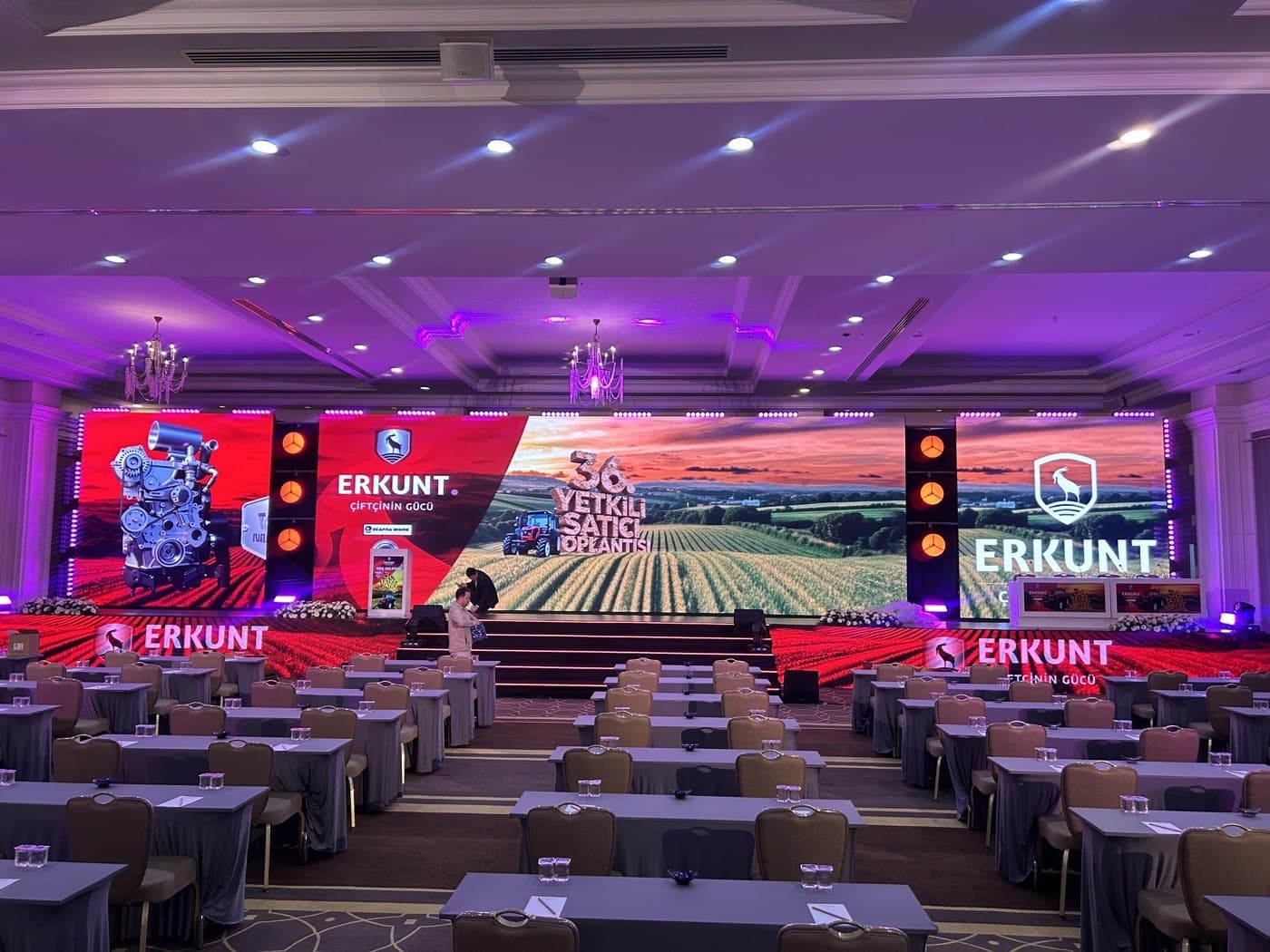
Choose pitch for the closest real viewing distance, not for a spec sheet. In a hotel ballroom where the first row sits four or five metres from the screen, P3.9 is usually enough; going finer can mean paying for detail nobody in the room will notice. Our guide to LED pixel pitch and viewing distance sets out the relationship in a table.
Why per-square-metre prices mislead
A headline rate per square metre often covers panels only. Processing, cabling, structure, crew, the operator, transport and extra days may sit outside it. Some suppliers quote the gross frame size, others the active image area. Before comparing totals, make sure every offer states the same size, the same pitch and the same scope.
Indoor versus outdoor walls
Indoor panels are designed for controlled light: ballrooms, congress halls and studios. Outdoor panels run much brighter to stay readable in daylight, are sealed against rain and dust, and are heavier. That changes the budget in several ways:
- Panel choice: outdoor walls usually use a coarser pitch; P3.9 to P4.8 is common for large open-air screens.
- Structure and wind: an outdoor screen needs a wind-rated structure, ballast and secure fixing, with wind limits taken from the manufacturer's data or a structural engineer. On the Aegean and Mediterranean coast, afternoon winds can be a planning factor.
- Power: higher brightness means more power, and open sites often need generators and separate distribution.
- Weather: rain plans, heat in direct sun and different brightness settings for day and night.
If your outdoor show in Antalya or Bodrum starts after sunset, daylight is only a problem during doors. Daytime festivals need full outdoor brightness all day. See the systems we supply on our LED screen rental in Turkey page.
Processing, sources and the operator
An LED wall is not a television with a single cable. Panels are driven by a processor and sending cards that scale the image to the exact pixel size of the wall. The scope grows with what you want to show:
- Single source: one presentation laptop or a logo loop keeps things simple.
- Multiple sources: slides, video, cameras and sponsor content need a switcher for clean transitions.
- IMAG: showing presenters or artists live adds cameras, camera operators and camera control.
- Media server and timecode: concerts and launches with content locked to music need a media server and programming time.
- Streaming and recording: broadcast outputs, recording and settings that avoid flicker on camera.
A video operator on site for the whole show is not optional; someone has to switch content on cue and fix a signal problem in seconds. If an LED quote has no operator line, part of the job has been left to you.
Structure, build time and hire days
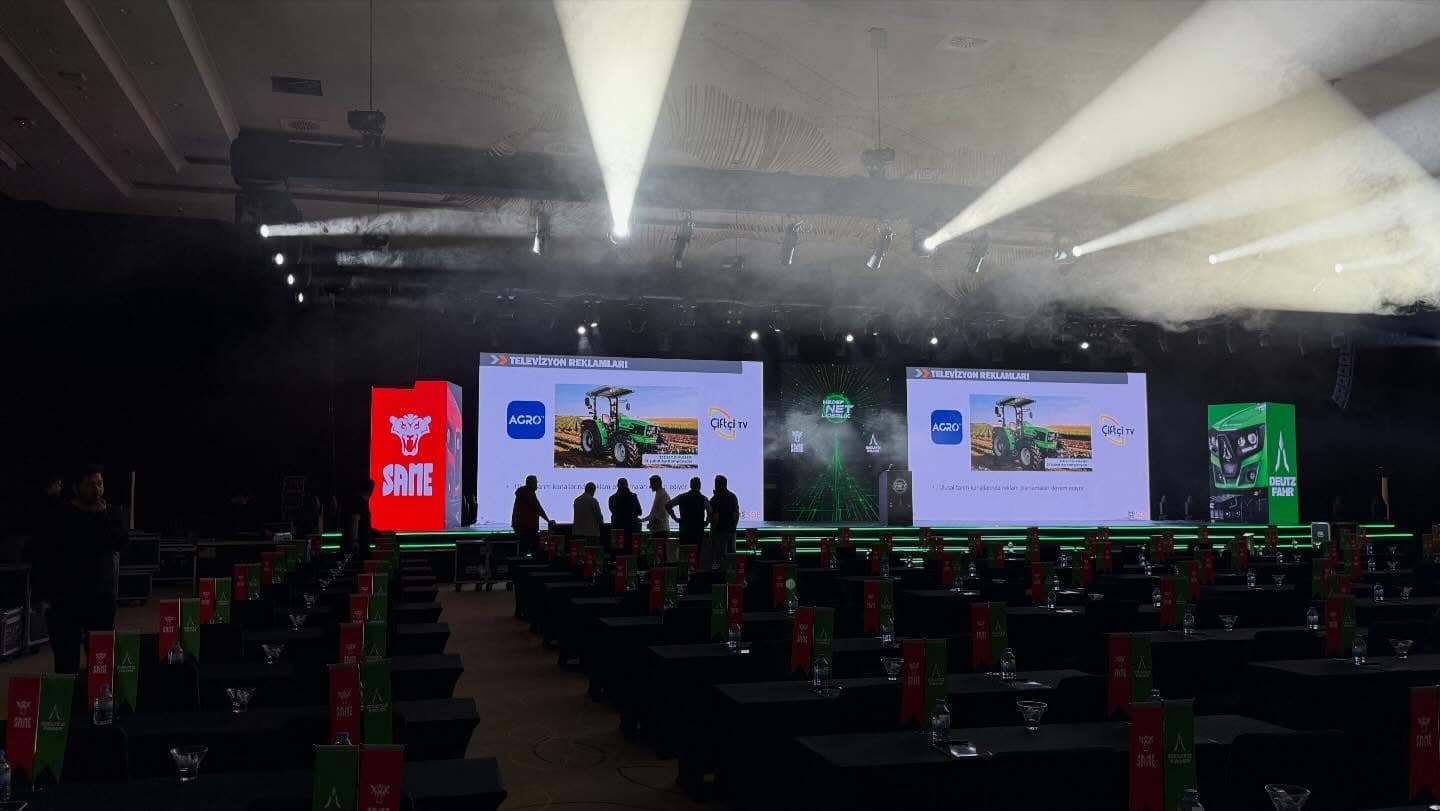
Screens either stand on ground-supported frames or are flown from truss or a roof. Ground stacks are practical in ballrooms and on small stages. Flying a large screen improves sightlines and frees the stage, but requires approved rigging points, chain hoists and riggers; our article on truss and rigging safety covers what to check.
A mid-size stage screen can be built in a few hours; a concert wall with side screens can take half a day or more. Leave a window to test the wall and check content on it before rehearsal. Colour, aspect ratio and legibility problems only show up once the wall is lit, and finding them at rehearsal creates overtime. Multi-day congresses and exhibitions are generally priced on the full hire period.
Typical LED packages by event type
| Scenario | Typical scope | Video infrastructure | Relative budget |
|---|---|---|---|
| Meeting or seminar (50–200) | One mid-size indoor wall upstage, confidence monitor for the presenter | One or two sources, operator | Low |
| Gala or launch (200–800) | Main wall plus two side screens, or a custom shape in the set | Switcher, playback, optional camera | Medium |
| Congress or dealer meeting (500+) | Wide main wall, IMAG side screens, confidence monitors | Multiple sources, camera crew, recording or stream | Medium to high |
| Concert or festival (outdoor) | Outdoor upstage wall, two IMAG screens, optional delay screen | Media server, multi-camera, generator | High |
Which choices move the budget
| Choice | Impact | How to balance it |
|---|---|---|
| Larger screen area | High | Size for legibility from the last row, not for a template |
| Finer pixel pitch | High | Match pitch to viewing distance; add a small fine-pitch screen for close viewing |
| Outdoor daytime use | Medium to high | Schedule key content after sunset where possible |
| Cameras and IMAG | Medium to high | Valuable in big rooms, often unnecessary in small ones |
| Flying the wall | Medium | Check venue rigging points early |
| Same-day build and strike | Medium | Secure access the day before |
How to compare LED quotes
- Is the size stated as active image area, with panel count and pitch?
- Are panels indoor or outdoor rated, and is brightness right for the setting?
- Are processor, cabling and switcher included?
- Is a video operator on site for the whole show?
- Are structure, flying hardware and ballast included?
- Are spare panels and a backup signal path planned?
- If you are filming or streaming, have refresh and camera settings been considered?
- Are build, test, strike, transport, power and VAT stated clearly?
Still deciding between a wall and projection? Read LED wall vs projector for events. To get an accurate figure, share the date, city and venue, indoor or outdoor, room dimensions and ceiling height, audience size and the type of content. Send your brief through our quote form and BernStage will return an itemised proposal with size, pitch and video infrastructure spelled out.