For schools and universities, graduation day is the most crowded and emotional event of the year. Good graduation ceremony staging makes sure every speech is heard, hundreds of graduates cross the stage without delays and every family gets a clear view of their moment. Whether you run an international school in Istanbul, a university campus event or a ceremony in a hotel ballroom, this guide covers the stage, sound, screens, lighting and running order that make the day work.
What a graduation ceremony needs technically
At any scale, a well-run graduation ceremony includes:
- Stage: a platform with separate stairs for going up and coming down, an accessible ramp where needed, and room for a lectern, a diploma table and official guests.
- Sound: a speech-first system that keeps every word clear across the whole audience, with enough headroom for processional music.
- Microphones: lectern mic, a wireless mic for the host, a separate mic for the name reader, and spares.
- LED screen and camera: live close-ups and name graphics for families at the back.
- Lighting: even, warm front light on faces when the ceremony runs into the evening.
- Power and crew: a reliable supply and technicians on site for the whole ceremony.
Many schools add a branded backdrop, a photo point and a cap toss moment with confetti or cold sparks. The backdrop matters more than it seems: it is the background of hundreds of photos, so check how it reads from the photographer's and camera's angle before the day.
Graduation ceremony staging by venue type
| Venue | Stage | Sound | Video |
|---|---|---|---|
| School courtyard or garden | Modular deck, 60–100 cm high, two staircases | Speakers on stands, fill speakers for deep areas | High-brightness outdoor LED for daytime |
| Indoor sports hall | Modular deck, simple backdrop | Distributed speakers aimed at the audience | LED wall, or projection if the hall is dark |
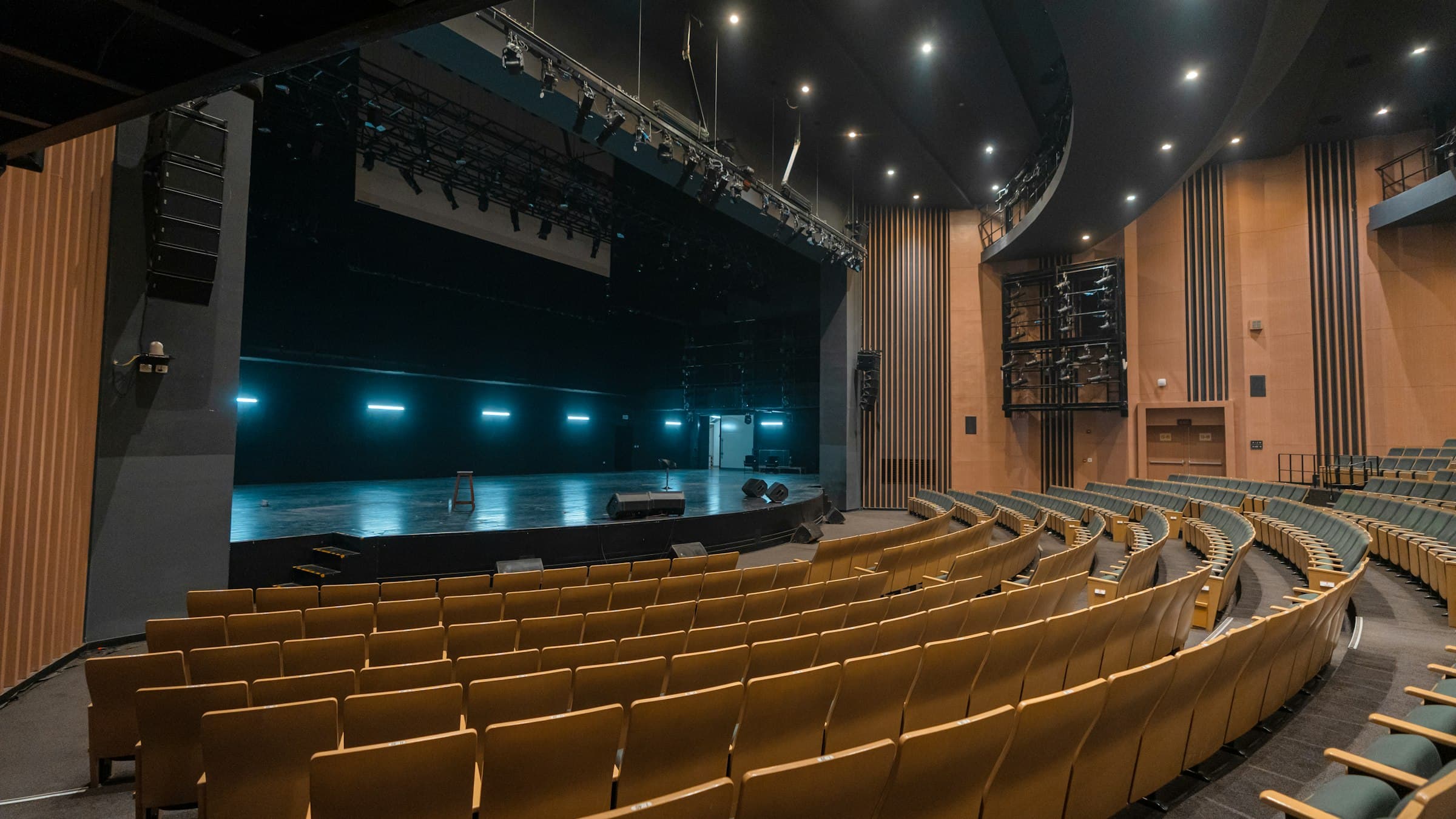
| Auditorium or hotel ballroom | Existing stage or low riser | House system or compact rental system | Projection or LED wall |
| Stadium or campus field | Large deck with roof or truss frame | Line array with delay speakers | Large LED wall plus side screens |
Sports halls and echo
Sports halls are the trickiest venue. Hard floors, high ceilings and parallel walls keep sound bouncing, and a big system played loud turns speeches into mush. The answer is not more volume: aim speakers straight at the audience, split the hall into zones with more speakers at lower level, and keep energy off walls and the ceiling. A final check once the stands start filling up makes a real difference.
Stage size, stairs and graduate flow
Size the stage for everything happening on it at once: lectern, diploma table, seated dignitaries, the graduate receiving the diploma and the photographer. For a few hundred guests in a school courtyard, an 8 x 4 m or 10 x 5 m deck usually works; add depth if officials sit on stage. Keep the height high enough for sightlines without adding unnecessary steps.
The key rule is one-way flow: graduates go up one staircase, receive the diploma, pause at the photo point and leave by the other. Handrails, non-slip treads, skirting and an accessible ramp should be in the plan from day one. See our stage rental Turkey page for deck and roof options.
Name reading and the photo point
With hundreds of graduates, name reading is where time goes. Put the reader beside the up staircase, keep the list in exactly the walking order, and show each name on the LED screen as it is read. It helps the audience follow and puts the name into the photos. Agree the official photographer's position together with the stage lighting.
Speech-first sound and microphones
The first job of the sound system is intelligibility. Speeches must be easy to follow at the back row, which depends on speaker placement, audience depth and room acoustics more than raw power. Outdoors, adding delay speakers halfway down a deep audience, time-aligned to the main system, is better than running the main speakers louder. A typical microphone plan:
- gooseneck lectern mic plus a spare wireless handheld,
- wireless handheld or lavalier for the host,
- a separate mic for the name reader,
- dedicated mics for a choir, band or student performance,
- spare batteries and a frequency plan for all wireless systems.
Prepare a playlist that matches the running order: processional, national anthem, background music for the diploma walk and the cap toss track. Our guide to wireless microphone rental covers mic choice, and our conference AV guide explains speech systems in more depth.
LED screens, cameras and lighting
In large ceremonies the back rows see the stage as a distant strip. A side or upstage LED screen with live camera feed lets every family watch their graduate up close, while also showing the programme, school branding, a photo slideshow and speaker names.
For daytime outdoor ceremonies, projection simply washes out in sunlight, so a high-brightness outdoor LED wall is needed, with a pixel pitch matched to viewing distance. Our comparison of LED wall vs projector explains the trade-offs, and our LED screen rental Turkey page lists options.
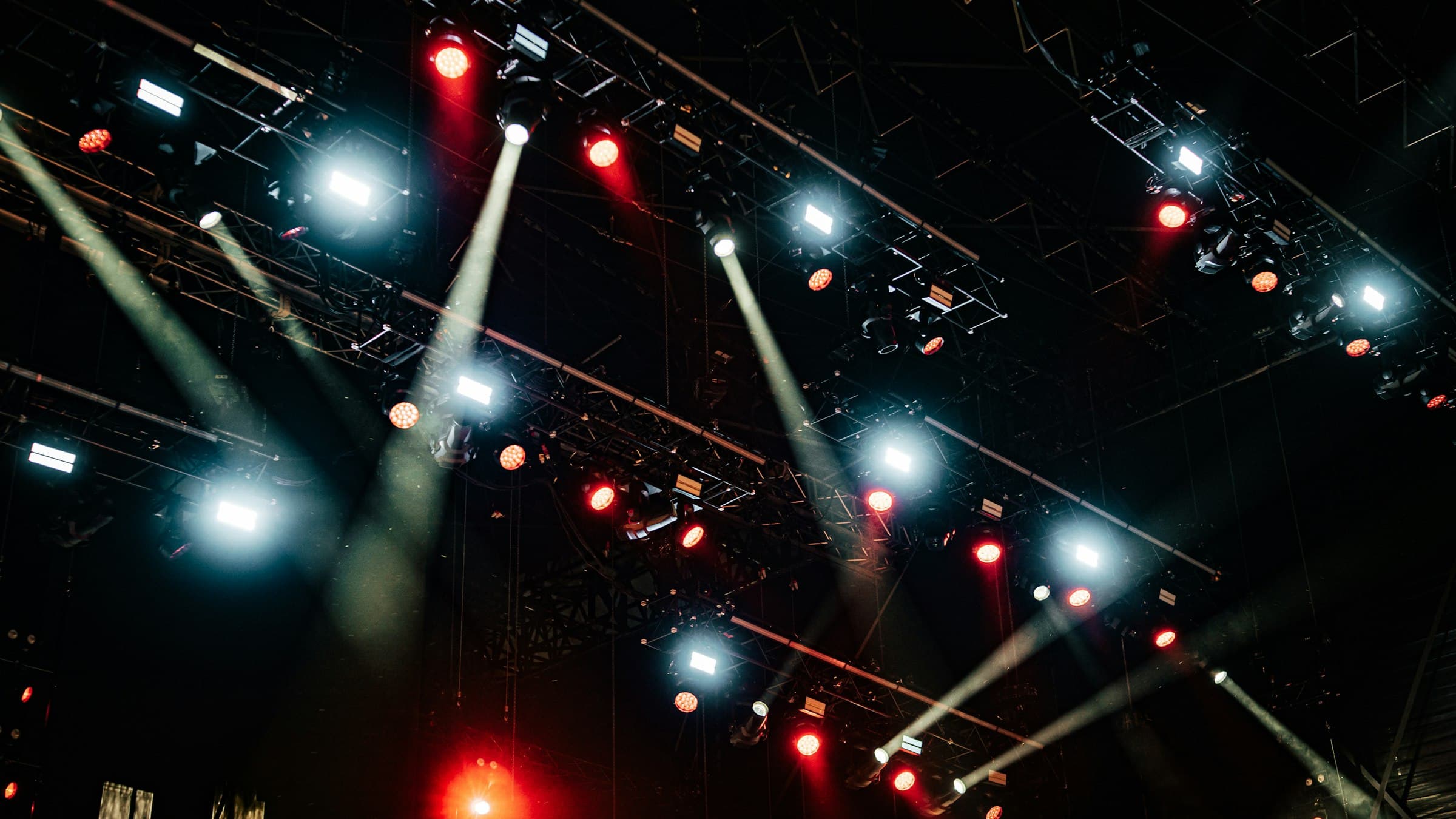
Lighting matters most when the ceremony runs into the evening. The priority is even, warm front light on the lectern, the diploma point and the photo area, so faces look natural on camera and in family photos. Coloured moving lights add atmosphere for the processional and the cap toss.
Cap toss, effects and the running order
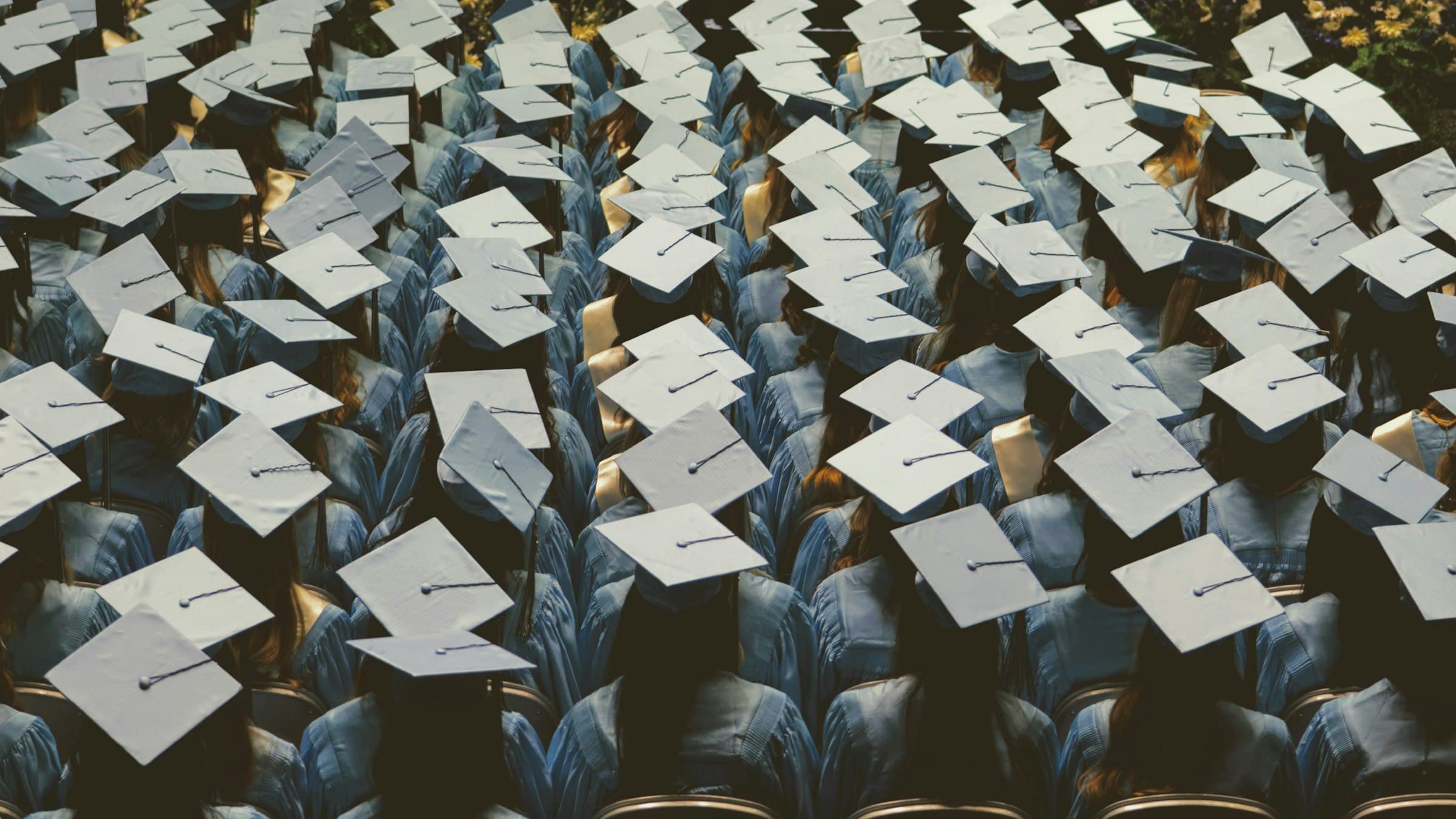
The cap toss is the most photographed moment of the day. Confetti cannons, confetti blowers and cold spark machines at the stage front are popular choices. Indoors they need venue approval; outdoors, wind decides where the confetti ends up. Set effects at the manufacturer's stated safety distances, have them run by an experienced operator and trigger them on the host's countdown.
Most graduation hiccups come from skipped rehearsals. A sensible order of the day:
- Build: outdoors, stage and LED the day before, sound and lighting on the morning.
- Sound check: lectern, host and reader mics at real speaking level.
- Graduate walk-through: one pass over the stairs to set order, waiting area and photo point.
- Doors: background music and the programme on screen.
- Ceremony: processional, anthem, speeches, diplomas, cap toss.
- Close and strike: leave the stage open for family photos, then load out.
June ceremonies outdoors in Turkey mean heat and strong sun. Schedule away from the harshest midday hours, shade the dignitary area and keep an indoor fallback plan for wind or rain.
What to send for a quote
Share the date and time, venue type, number of graduates and guests, number of speakers, any live music or performances and your effects preferences. BernStage delivers stage, sound, LED and lighting with one crew in Istanbul and across Turkey; see our event production Turkey service. Send the details through our quote form and we will propose a plan for your ceremony.