Delegates remember the content of a congress, but whether that content actually reaches them depends entirely on the technical setup. A speaker nobody at the back can hear, a slide nobody can read or a livestream that drops mid-session can undo months of programme planning. Getting conference AV in Turkey right means microphones, discussion systems, screens, recording, streaming and interpretation all working together. This guide breaks down each component for international associations and agencies planning meetings in Istanbul, Antalya and beyond.
Start with the programme format
The first technical question is the shape of the programme. A congress that opens with one plenary and splits into several breakout rooms needs separate audio, video and technician plans for every room. Answer these early:
- How many rooms, and what is the capacity of each?
- Are sessions single-speaker keynotes, panels or round-table discussions?
- Will delegates ask questions from the floor?
- Are any speakers joining remotely?
- Will sessions be recorded or streamed?
- Is interpretation needed, and into how many languages?
Those answers drive everything from the microphone count to the control room design.
Choosing microphones and discussion systems
Microphone choice follows how speakers behave on stage and how the session is structured:
| Microphone type | Best for | Strength | Watch out for |
|---|---|---|---|
| Lectern (gooseneck) | Opening speeches, protocol | Fixed, reliable, simple | Level drops when the speaker steps away |
| Lavalier | Panels, seated presentations | Discreet, hands-free | Clothing noise, placement |
| Headset | Speakers who walk the stage | Constant distance, high clarity | Fit per speaker, hygiene |
| Handheld | Moderators, audience Q&A | Easy to pass around, robust | Enough units and spare batteries |
| Discussion (delegate) system | Round tables, board meetings | One mic per delegate, chair controls the floor | Cabling or wireless units to suit the layout |
Discussion systems give each delegate a microphone unit, while a chair unit manages who has the floor. They are ideal for board meetings, assemblies and workshops. Panels usually get a lavalier or table microphone per panellist plus a handheld for the moderator.
We rely on Shure and Sennheiser wireless systems. When several breakout rooms run in the same hotel, frequencies must be coordinated across all rooms, not room by room.
Room acoustics and the sound system
In meeting rooms, the goal is clarity rather than volume. Even coverage across the room, supported by delay speakers in deep rooms, matters more than big boxes at the front. A small stage monitor helps speakers hear themselves, and automixing on the console prevents feedback in sessions with many open microphones. Our guide to choosing an event sound system goes deeper. It also helps to send the sound team walk-in music, award stings and session-break playlists in advance, so transitions between sessions feel polished rather than improvised. In breakout rooms, a compact system and a single technician per room is often enough, as long as someone can reach every room quickly when a presenter’s laptop or microphone needs attention.
LED screen or projection?
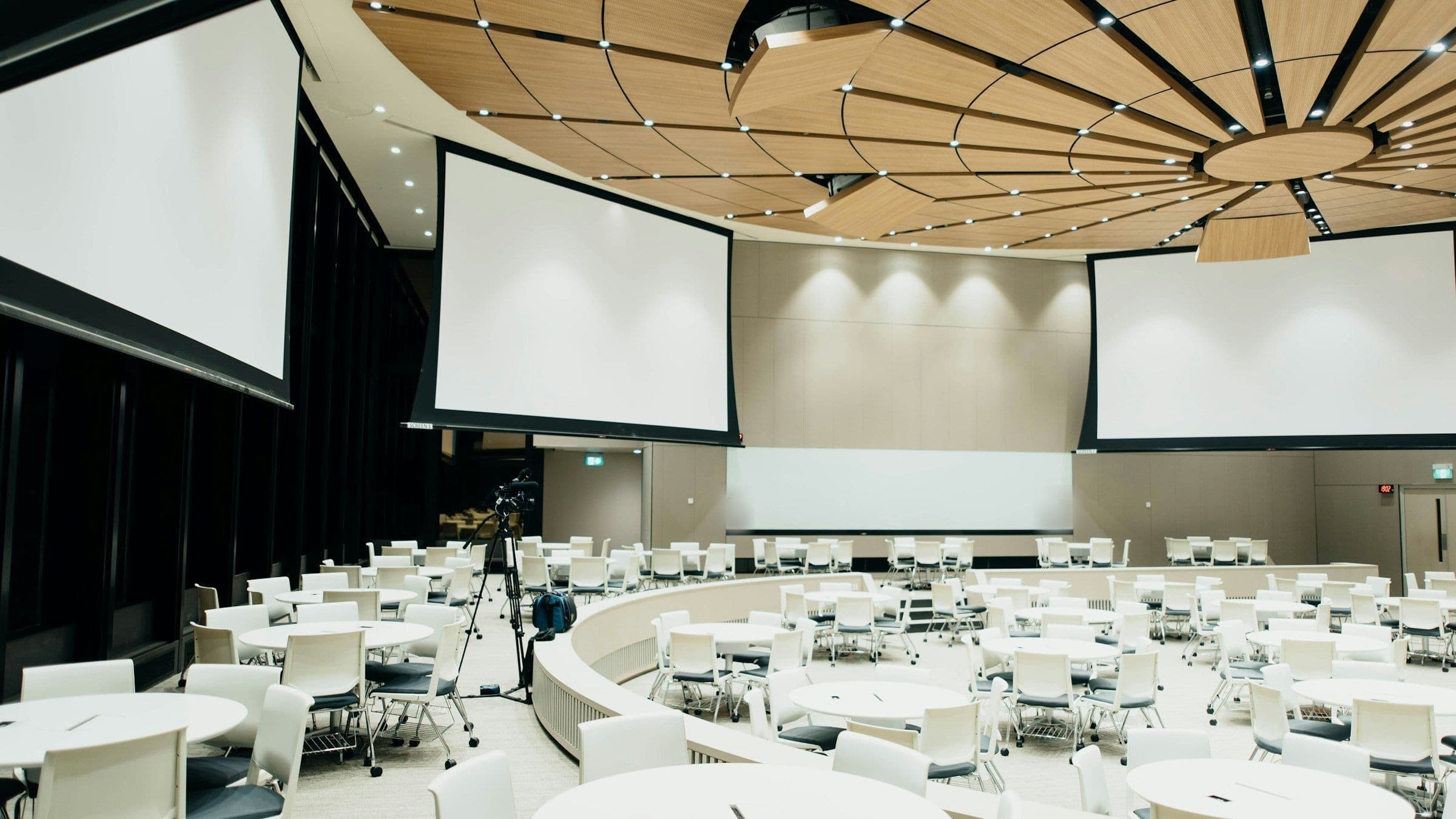
- Projection is cost-effective in small and mid-size rooms that can be darkened, but images wash out as ambient light rises and presenters can end up in the beam.
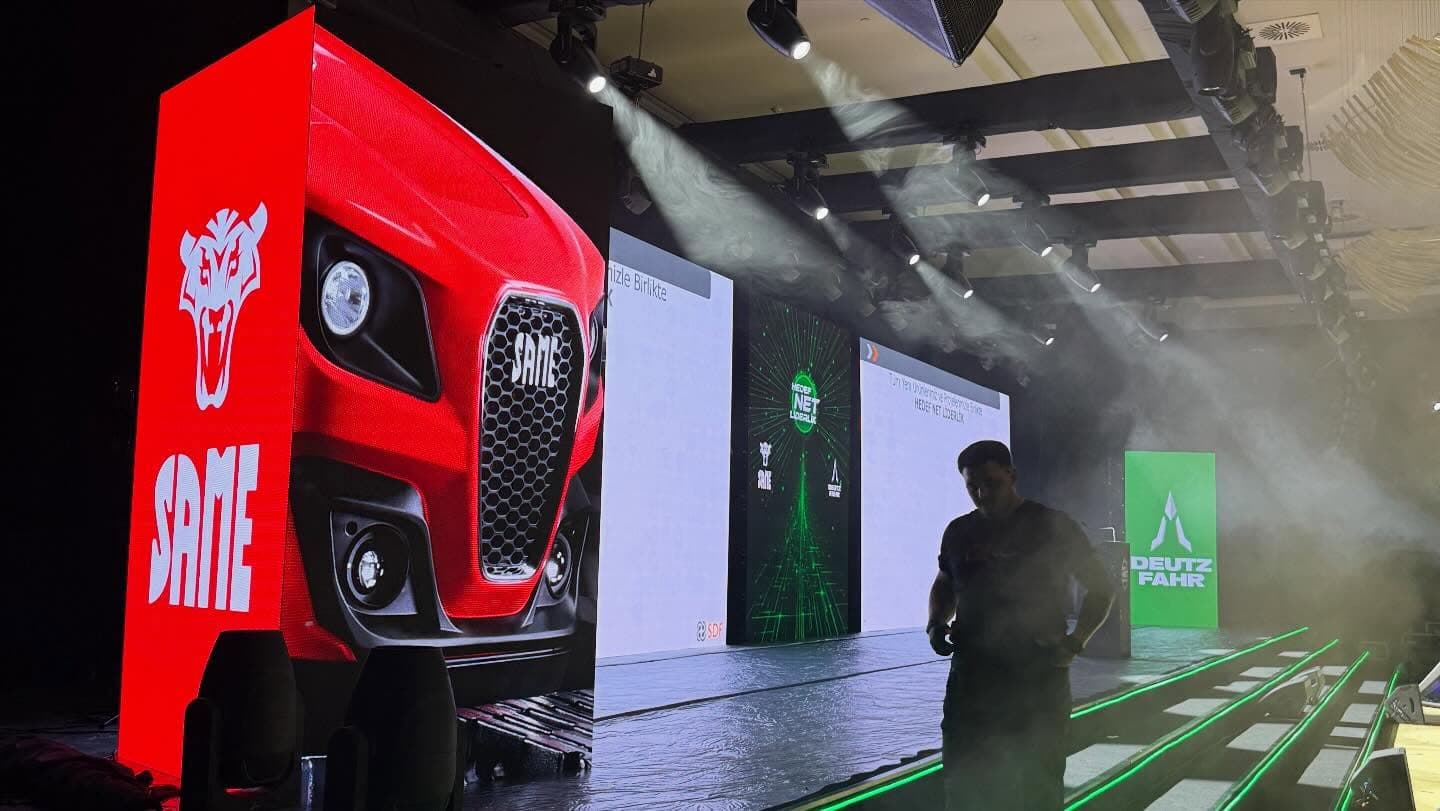
- LED walls stay bright and sharp even in daylight rooms, can be built to any stage size and look far better on camera. See our LED screen rental in Turkey page.
- Side screens and confidence monitors: in large rooms, IMAG feeds help the back rows, while floor monitors show presenters their slides and timer.
Ask speakers to prepare slides in the screen’s aspect ratio with text large enough to read from the last row.
Recording, streaming and hybrid sessions
Recording and streaming are now standard at most congresses. A typical setup includes one or two cameras per room, a vision mixer and an output that combines slides with the speaker’s camera. Key points:
- A separate stream mix: the room mix rarely suits a stream, so give the encoder its own audio feed.
- Wired, redundant internet: hotel Wi-Fi is not a streaming solution. Book a dedicated wired line and, ideally, a backup.
- Remote speakers: test the audio routing so remote presenters are heard in the room and online, and can hear the room themselves.
- Backup recording: record sessions on a separate device as well as the stream.
Preparing for simultaneous interpretation
At international congresses, interpretation is part of the audio system. Interpretation teams usually supply booths and receivers, but the sound team must place booths with a clear view of the stage, send interpreters a clean floor feed, route the language channels to the stream and recordings, and allow space for receiver distribution. Settle all of this in a joint technical meeting with the interpretation provider.
A few details are often missed:
- Slides in advance: interpreters do much better work when they see presentations beforehand, so the control team should collect files in a shared folder.
- Video audio: sound from videos played during sessions must also reach the booths, or interpreters cannot translate it.
- Floor questions: delegates must always use a microphone; questions asked without one never reach the booth or the stream.
- Floor space: booths take up room and can reduce seating capacity, so include them in the floor plan from the start.
Budget and next steps
Costs depend on the number of rooms, microphones and cameras, LED or projection, streaming and recording scope, interpretation integration and the number of congress days. On multi-day events, keeping equipment installed and having technicians on hand between sessions saves both time and stress.
BernStage supplies sound, video and staging for meetings and congresses in Istanbul and Antalya. Read our corporate event production guide, explore our event production in Turkey, or share your programme and floor plans through our quote form.