Theatre stage hire in Turkey usually means turning a space that is not a theatre, such as a hotel ballroom, a cultural centre, a sports hall or an open-air amphitheatre, into one for a night: a stage deck, black masking, theatre lighting and a sound system designed for speech. For touring theatre companies, international comedians playing to expat audiences in Istanbul or Antalya, and agencies adding a show to a corporate programme, the priority is focus rather than spectacle. Every face must be seen, every word heard, and everything else should disappear into the dark.
What theatre stage hire in Turkey includes
- Stage deck: flat, solid and silent; creaking or flexing floors are not acceptable under actors.
- Masking: black backdrop, side legs and borders to hide backstage traffic.
- Theatre lighting: profile spots for front light, PC or fresnel washes, backlight, an optional follow spot and a cue-based lighting desk.
- Sound: speech-optimised main speakers, front fills, stage monitors and playback for music and effects.
- Truss: front and rear lines for lights and drapes.
- Backstage: blue working lights, intercom and a stage manager's desk.
Deck options are on our stage rental in Turkey page.
Stage size, height and sightlines
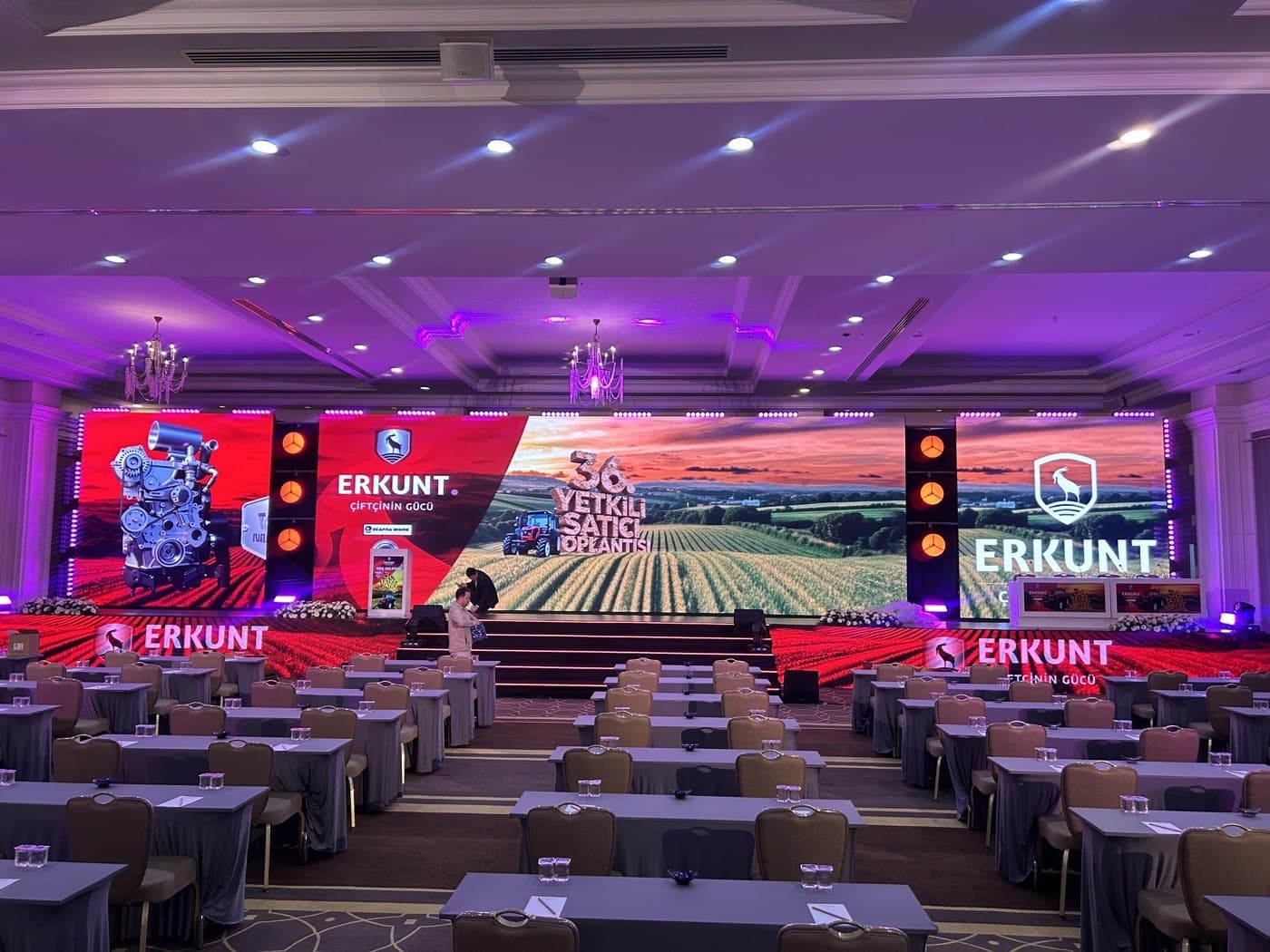
In a flat hotel ballroom, a 60–100 cm deck lets the back rows see the performer's body; in a raked venue, a lower stage often works. Stand-up needs roughly 4x3 m to 6x4 m, while a play with a set typically needs 8x6 m or more plus wing space for scene changes. After the build, sit in the back and side seats: speaker stacks, screen legs and camera risers must not cut the view, and front fills should be low and compact.
Theatre lighting basics
Theatre lighting aims for even, soft light on every face. The stage is divided into areas, each lit from two front angles at roughly 45 degrees with shuttered profile spots so light does not spill onto drapes or the audience. Backlight separates actors from the backdrop, side light shapes dancers, and LED washes and gobos set the mood. Unlike a live concert desk, a theatre console runs a pre-programmed cue list, which is why the technical rehearsal walks through every cue with the show. Our lighting design basics article goes deeper, and fixture options are listed on our stage lighting rental in Turkey page.
Stand-up comedy: simple, but no margin for error
One performer and one microphone: if that microphone drops out for a second, the timing of a joke is gone. A typical comedy spec looks like this:
- A wired handheld microphone on a sturdy stand, or a wireless one with an identical spare.
- A main system tuned for speech, front fills and a stage monitor.
- Warm, even front light that shows facial expressions, with a simple coloured or branded backdrop.
- Controllable house light for crowd work.
- A stool, water and walk-on music playback.
If the show is filmed, light for camera: consistent colour temperature, no hard shadows on the face and enough audience light for reaction shots. Side LED screens help in large rooms, balanced against the stage light.
Theatre sound and microphones
In small rooms, unamplified voices may be enough. In larger venues and outdoors, actors wear headset or lavalier mics, and musicals give every performer a wireless channel that is opened and closed scene by scene. See our wireless microphone guide. Music and effects are tied to a cue list, and intercom between backstage and the operators lets the stage manager call every change on time.
Open-air amphitheatres and safety
In summer, many shows move to open-air amphitheatres and hotel gardens along the Aegean and Mediterranean coasts. Outdoors, the rules shift:
- Lighting only works after dark, so set the curtain time by sunset, not by habit.
- Drapes act like sails in the wind; weight them, or use mesh or rigid panels instead.
- There are no walls or ceiling to support the sound, so it dissipates faster and is affected by wind; actor microphones and stage monitors matter even more.
- Weather planning: separate power circuits for sound and lighting, rain protection for equipment and an agreed cancel-or-delay threshold.
Indoors or out, some rules never change: drapes and set materials should be flame-retardant, emergency exit signs stay visible during blackouts, backstage routes and steps are marked, and the stage edge must be visible in the dark.
Touring and the technical rider
Touring shows meet a different venue every night, so collect room dimensions, ceiling height and rigging points, power capacity, load-in access and dressing rooms in advance. Our technical rider guide explains what to include.
| Show type | Typical stage | Lighting | Sound |
|---|---|---|---|
| Stand-up | 4x3–6x4 m, 60–100 cm | Even front light | Handheld mic + spare, front fill |
| Play with set | 8x6 m+, wing space | Area front light, back and side light, cue list | Headset or lavalier, effects playback |
| Musical or variety show | Wide stage, band or playback area | Follow spot, moving heads | Multi-channel wireless, monitors |
| Children's theatre | Low stage, wide apron | Soft, colourful light | Lavaliers, controlled level |
A typical same-day schedule: morning deck, truss and masking; midday hanging and focusing; afternoon soundcheck and technical rehearsal; evening show, then load-out.
Shows anywhere in Turkey
Tours rarely stop at the big cities. BernStage ships stage, sound, lighting and LED from Istanbul to all 81 provinces of Turkey; see our nationwide stage rental guide and our event production in Turkey service. Send the venue details, show type and rider through our quote form and we will return an itemised plan for stage, lighting and sound.